Caught your dog licking other dogs bottom at the park and wondering whether it’s normal, gross, or a sign of something to worry about? The honest truth: dog licking other dogs bottom behavior is one of the most common — and most misunderstood — social interactions in the dog world. Here are the 5 best reasons it happens, when it’s normal vs concerning, and how to redirect the behavior if it’s becoming a problem.

Why dog licking other dogs bottom is so common
Dogs gather most of their social information through scent. The anal area, including the anal glands, releases a unique chemical signature that contains:
- Individual identity (“who is this dog?”)
- Sex and reproductive status
- Recent diet and stress levels
- Health status (illness, anal gland issues)
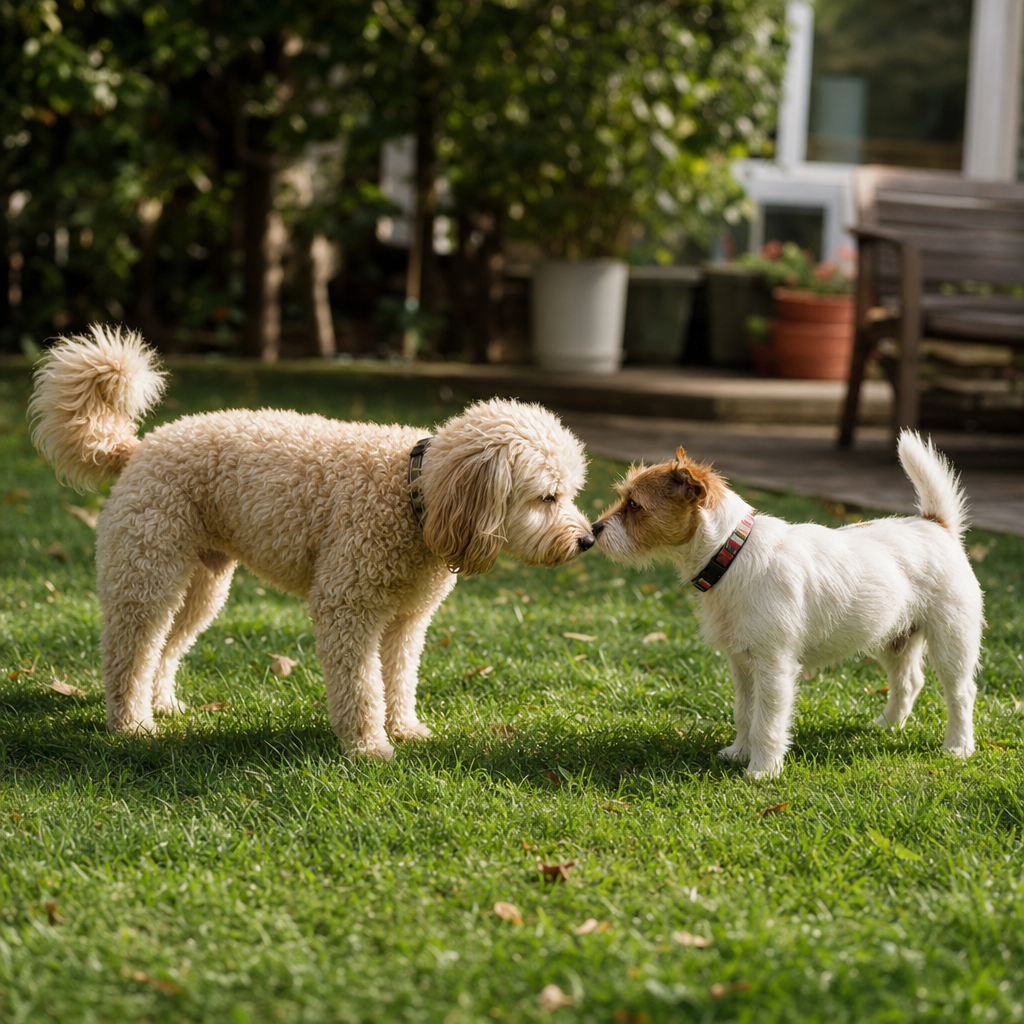
For dogs, this exchange is the equivalent of a handshake plus a quick conversation. Sniffing usually comes first; licking is a more intense follow-up that some dogs do habitually and others rarely.
The 5 best reasons for dog licking other dogs bottom
1. Social information gathering (most common)
The standard explanation. A dog licking other dogs bottom in a social greeting is essentially getting a fuller chemical profile than sniffing alone provides. Some dogs are naturally more thorough investigators than others — this often comes down to individual personality and how much they value scent information.
Healthy social licking is brief (2-10 seconds), accompanied by relaxed body language, and ends with both dogs moving on naturally. No tension, no fixation.
2. Anal gland scent attraction
Some dogs have particularly strong-smelling anal glands due to impaction, infection, or just genetics. Other dogs are drawn to lick them more intently. If you notice multiple dogs persistently targeting one specific dog’s rear, that dog may have anal gland issues.
See our anal gland guide for symptoms to watch in your own dog. Persistent excessive licking from other dogs is sometimes the FIRST clue that anal glands need attention.
3. Submissive or appeasement behavior
Some dogs lick other dogs as a way of signaling submission or appeasement, especially toward dominant or unfamiliar dogs. This is more often face/mouth licking but can extend to rear licking in some contexts.
Body language tells you which it is: submissive lickers usually keep low body posture, ears back, tail tucked or low. Social lickers stand normal height with neutral or wagging tails.
4. Smell of stool, urine, or recent activity
If a dog has recently pooped, peed, or rolled in something, others may lick at the residual scent. This isn’t usually about the dog as an individual — it’s about whatever scent they’re carrying.
Common after dogs have eaten unusual food, had loose stool, or visited a scent-rich location. See our poop color chart for context on what unusual stool can attract attention.
5. Compulsive or habit-driven licking
Some dogs develop excessive licking as a habit — licking faces, ears, rears of any dog they meet. This crosses from normal social investigation into compulsive behavior when:
- It happens at every greeting regardless of context
- The dog can’t be easily distracted from it
- Other dogs visibly try to move away but the licker pursues
- It happens with the same dog repeatedly to an extreme degree
This is the version that often needs redirection.
When dog licking other dogs bottom is NORMAL
Five signs it’s just regular social behavior:
- Brief (under 10 seconds per dog)
- Both dogs are relaxed and consenting (no avoidance from the licked dog)
- Ends naturally and they go back to playing or sniffing elsewhere
- No fixation on a single dog repeatedly
- Your dog isn’t doing it to every single dog they meet
Most dog-to-dog rear interactions fall into this category. The scenes look gross to humans but make perfect sense in dog social language.
When dog licking other dogs bottom is CONCERNING
Six patterns worth investigating:
- Targeting one specific dog repeatedly. Suggests an anal gland issue or smell anomaly on the targeted dog.
- The licked dog tries to move away but the licker persists. Boundary violation — needs redirection.
- Your dog does it to every single dog and won’t be distracted. Compulsive behavior — talk to a trainer.
- Licking is followed by vomiting or stool changes in your dog. Ingested pathogens (Giardia, parasites). See our diarrhea guide.
- The licked dog snaps or growls. Social offense — your dog isn’t reading signals well. Recall and redirect.
- The licking causes hair loss or skin irritation on the licked area (if it’s your dog being licked). Vet visit warranted.
Health risks of dog licking other dogs bottom
Three real but usually mild risks:
- Parasite transmission. Giardia, hookworms, and roundworms can spread through fecal contact. See our worms guide.
- Bacterial exchange. Mostly transient — both dogs’ immune systems usually handle it. Salmonella or E. coli exposure is theoretically possible.
- Skin irritation on the licked dog if licking is persistent.
The risks are low enough that most well-adjusted, healthy dogs at dog parks don’t get sick from this behavior. But staying current on deworming and stool testing minimizes the risk further.
The AKC dog greeting etiquette guide has a useful overview of normal social interactions if you want a broader read on dog-to-dog communication.
How to redirect dog licking other dogs bottom behavior
If your dog is the overly-enthusiastic licker, three steps:
- Recall cue + reward. Practice “come” with high-value treats. Use it BEFORE the licking escalates.
- Leash control at greetings. Short loose leash during introductions. After 5-10 seconds of sniffing/licking, gently move them apart.
- Trainer or behaviorist if compulsive. If it’s truly habitual and the dog can’t be redirected, professional help works better than DIY for compulsive cases.
If your dog is the one being persistently licked and getting irritated:
- Step between the dogs to break the line of sight
- Recall your dog and move them to a different area
- Check your own dog for anal gland issues (smelly area, scooting, see straining guide)
Dog park etiquette around dog licking other dogs bottom
Three norms most dog park regulars follow:
- Brief sniff/lick exchanges are fine. Don’t intervene unless it’s escalating.
- Respect the other dog’s signals. If the licked dog moves away or growls, your dog needs to stop. Recall.
- Don’t shame normal behavior. Pulling your dog away mid-sniff for “manners” reasons can actually create anxiety around socialization.
Most well-socialized dogs sort out their own social norms with minimal human intervention.
Puppies and dog licking other dogs bottom
Puppies do this MORE than adults — they’re learning dog social norms and gather more information from each interaction. Some adult dogs tolerate this from puppies and not other adults. This is normal age-appropriate behavior.
By 12-18 months, most dogs settle into their adult social patterns. If your adolescent is still aggressively licking every dog they meet, the redirection training above is appropriate.
FAQ
Is dog licking other dogs bottom unhygienic? Yes, mildly — but most healthy dogs handle the exposure fine. Stay current on deworming and your dog will be okay.
Why does my dog lick MY bottom area sometimes? Same reason — scent information gathering. Redirect with toys or attention. Doesn’t mean anything weird.
Should I clean my dog after the dog park? Wipe paws and face. The licked area doesn’t need special cleaning.
Could this spread illness from one dog to mine? Yes if either dog has a parasite. Pre-park: confirm your dog is current on deworming. Post-park: watch for unusual stool for 5-7 days.
What if multiple dogs lick MY dog and they don’t lick others? Strong sign of anal gland or scent issue on your dog. Vet check.
Bottom line
Dog licking other dogs bottom is normal social investigation — usually brief, consensual, and harmless. The 5 best reasons: scent communication, anal gland attraction, submissive behavior, residual scents, and compulsive habit. Watch for boundary violations, fixation on a single dog, and compulsive patterns. Stay current on deworming, redirect persistent lickers gently, and let healthy dogs sort out their own social etiquette in most cases.
This article is general information, not veterinary advice. If your dog is sick, talk to your vet.