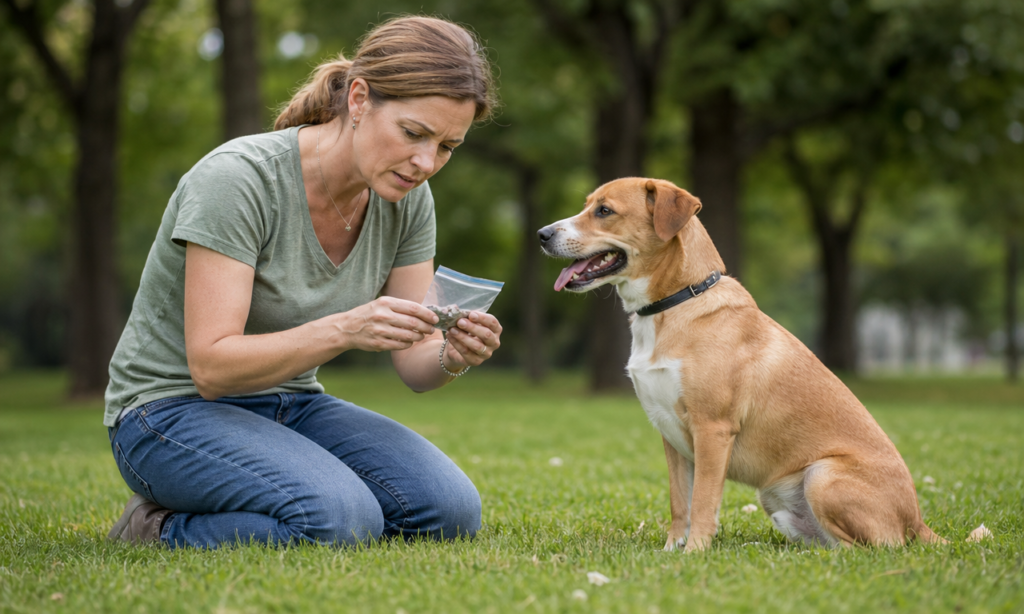
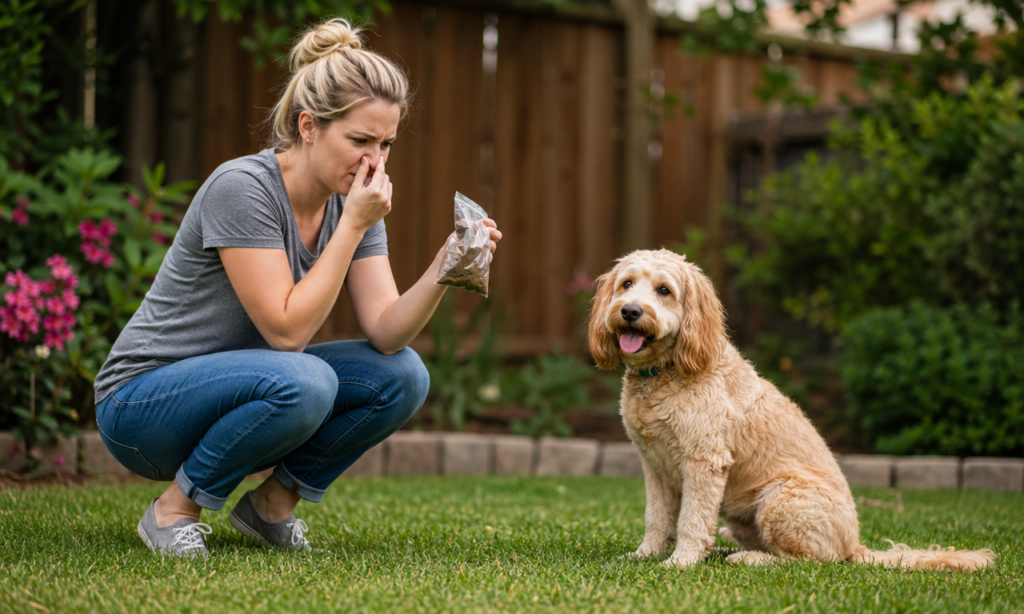
If your dog is scooting across the carpet, leaving a faint fishy smell, or licking their rear obsessively, you’re probably already searching for dog anal gland issues — and you’re in the right place. Anal gland problems are one of the most common reasons dogs visit the vet for behavior that owners initially mistake for “weird quirks” or worms.
Below: what anal glands actually do, the five most common dog anal gland issues, what you can do at home, and exactly when to stop guessing and call the vet.
What anal glands are (and why they exist)
Dogs have two small scent glands flanking the anus, roughly at the 4 and 8 o’clock positions. They produce a strong-smelling fluid that’s normally expressed in tiny amounts every time the dog poops. Evolutionarily, this fluid was a scent-marker — which is why dogs sniff each other’s rear ends in the first place. It tells one dog about another dog’s age, sex, and recent meals.
In a healthy dog, you’ll never know the anal glands exist. They self-empty during normal bowel movements. Dog anal gland issues show up when that self-emptying stops working — which is more common than people realize.
1. Impacted anal glands
The most common dog anal gland issues — the ducts get blocked, the gland fills with thick fluid, and the dog feels persistent pressure or pain back there.
Telling signs:
- Scooting across carpet or grass (the unmistakable signature)
- Excessive licking of the anal area
- Strong fishy smell, even right after a bath
- Visible swelling at the 4 or 8 o’clock position around the anus
- Dog seems suddenly grumpy when sitting
Common causes: soft stool (which doesn’t push hard enough on the glands during pooping), obesity, breed predisposition (small breeds — Chihuahuas, Cocker Spaniels, French Bulldogs — are most prone), low-fiber diet.
What helps: manual expression at the vet or groomer fixes the immediate impaction in five minutes. Long-term, addressing the underlying cause matters more than expressing every month.
2. Anal gland infection
Impacted glands that aren’t expressed can become infected. The gland turns angry red, the surrounding skin gets inflamed, and the dog often becomes obviously uncomfortable.
Telling signs requiring same-day vet attention:
- Visible redness, swelling, or heat at the gland location
- Yellow or bloody discharge instead of the usual brown fluid
- Reluctance to sit or lie down
- Unusual aggression when you touch their rear
- Fever or general lethargy
Treatment is typically antibiotics for 10–14 days plus expression. Don’t try to treat at home — infections progress quickly.
3. Anal gland abscess
If an infection isn’t caught, the gland can rupture into an abscess — a pocket of pus that’s painful and visible as a swollen, dark-red lump near the anus. The abscess may eventually rupture on its own through the skin, leaving an open wound and a very dirty rear.
This is an emergency. Same-day vet, no exceptions. The abscess needs to be drained, cleaned, and managed with antibiotics. Recovery is usually 2–3 weeks with twice-daily wound care at home. Catching it before rupture is much easier on the dog and your bank account.
4. Recurring impactions / chronic issues
Some dogs have anal glands that just don’t self-express well, no matter what you change in their diet. These dogs need monthly or quarterly manual expression for life. It’s not glamorous but it’s manageable.
For the unlucky 1–2% of dogs whose anal glands cause real lifestyle problems, surgical removal (anal sacculectomy) is an option — it eliminates the issue permanently but has a small risk of fecal incontinence as a side effect. The American Animal Hospital Association has a good summary of when surgery is appropriate.
5. Anal gland tumors (rare but serious)
Anal sac adenocarcinoma is rare but serious. It’s most common in older dogs, presents as a firm lump that doesn’t drain or shrink with expression, and may show up alongside elevated calcium on bloodwork.
Red flags:
- Hard lump near the anus that doesn’t change with expression
- Increased thirst and urination (high calcium effect)
- Older dog (8+)
- Persistent symptoms despite treatment
This is a vet workup with bloodwork and imaging. Caught early, prognosis is much better than people assume.
Best home remedies for mild dog anal gland issues
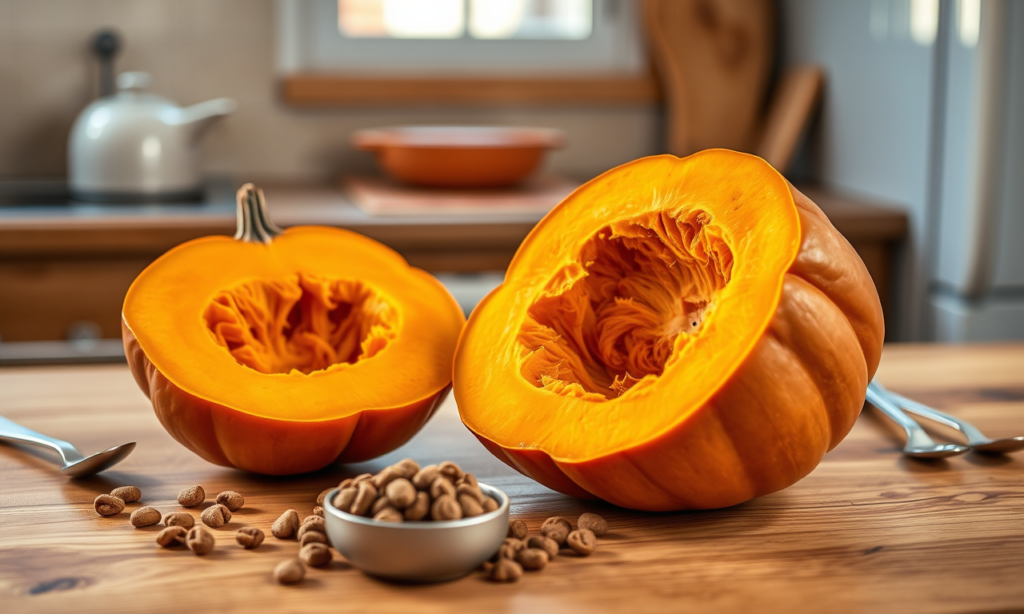
- Bulk up the stool. Soft mushy stool is the #1 cause of impactions. Add a tablespoon of canned pumpkin per 10 lb of body weight to firm things up. Our stool guide covers fiber dosage details.
- Slow down weight gain. Overweight dogs have weaker pelvic-floor pressure on the glands during pooping. Even a 10% weight reduction makes a real difference for dogs prone to impaction.
- Add omega-3. A teaspoon of fish oil daily reduces gland inflammation in some dogs. Not every dog responds but it’s low-risk to try.
- Daily exercise. Movement helps gut transit, which helps consistent stool, which helps glands self-express.
- Don’t try DIY expression at home. The internal expression technique requires a finger inside the rectum — done wrong, you push the contents inward and worsen the impaction. Leave it to the vet or groomer.
When to call the vet for dog anal gland issues
- Same day: visible swelling, redness, or any discharge that’s bloody or pus-like
- This week: persistent scooting (more than 2–3 days), strong recurring fishy smell, behavioral changes around their rear
- Routine check: if you’re new to expressing or your dog has chronic issues, schedule a single vet visit to learn what “normal” looks like for your specific dog
Related signs that point at anal gland issues vs other GI problems: our guides on a dog straining to poop, mucus in dog poop, and the dog poop color chart cover overlapping symptoms that can confuse the diagnosis.
The bottom line
Most dog anal gland issues are mild, common, and easily treatable with a vet or groomer visit. The dangerous version — abscess or tumor — is much rarer but progresses fast, which is why a fishy smell or persistent scooting deserves attention rather than a wait-and-see.
If you’re searching for dog anal gland issues because your dog has been scooting for a few days, that’s almost certainly an impaction. Book a vet or groomer this week and address the underlying cause (usually diet or weight) so it doesn’t keep coming back.
This article is general information, not veterinary advice. If your dog is sick, talk to your vet.
If you’re searching for dog anal gland issues information specifically, this guide walks through every angle. The dog anal gland issues question comes up often and the practical answers are usually simpler than search results suggest.