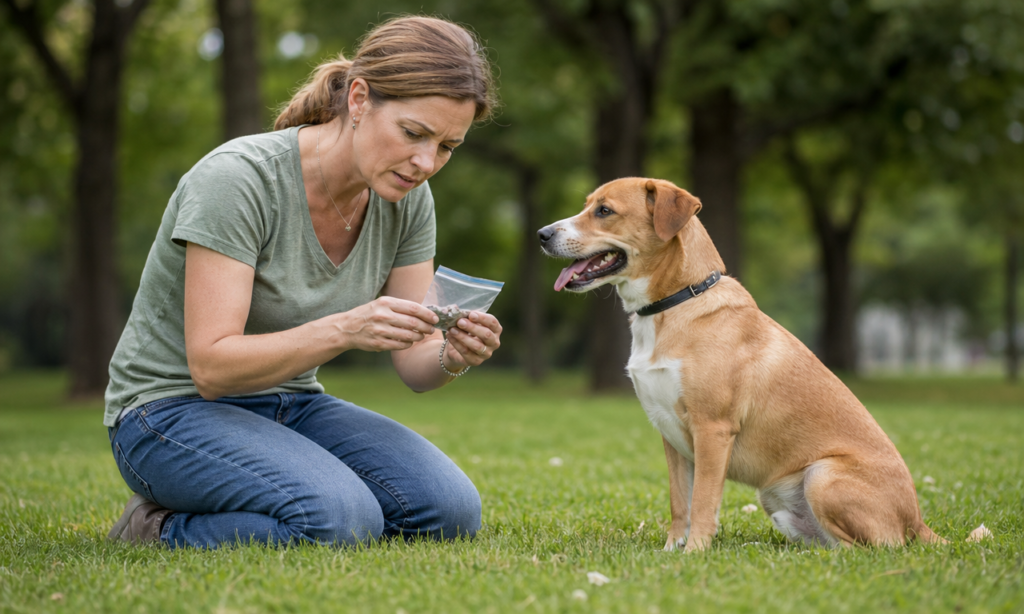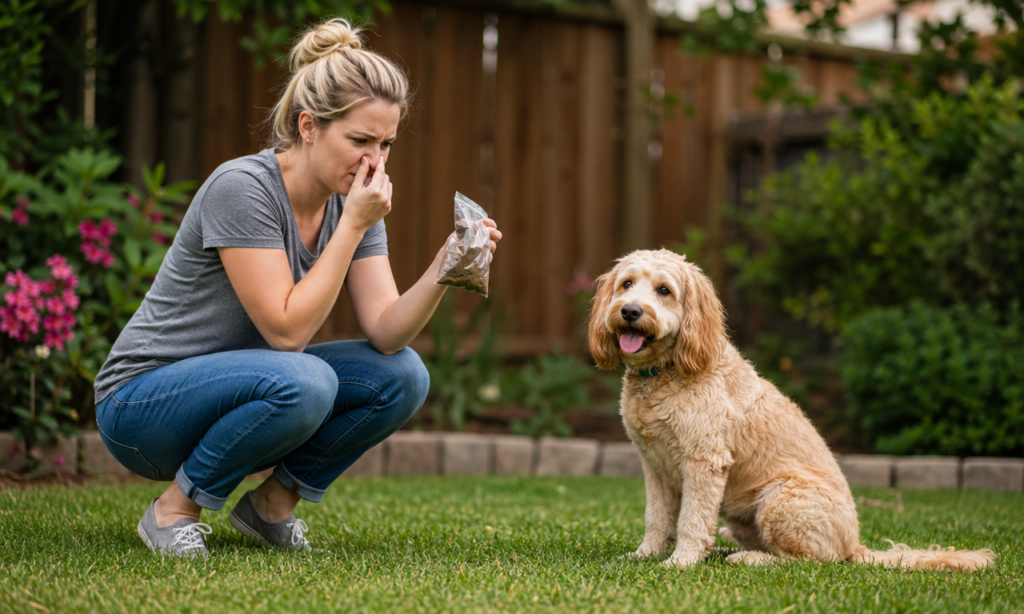
If your vet just ordered a fecal occult blood test dog work-up and you’re wondering what it actually is, when it’s needed, and what the results mean — you’re in the right place. The fecal occult blood test dog protocol detects blood in stool that’s invisible to the naked eye, and it’s one of the most useful early-warning diagnostic tools for GI issues. Here are the 5 best things to know about the fecal occult blood test, including cost, prep, and what positive results actually mean.

What a fecal occult blood test dog work-up actually detects
“Occult” means hidden. The test detects microscopic blood in stool that you’d never see by looking. Three sources of hidden GI blood:
- Upper-GI bleeding (stomach, small intestine). Often invisible because blood is digested and breaks down before reaching the colon.
- Slow chronic bleeding from polyps, tumors, or ulcers. Volume too low to color the stool but accumulates over time.
- Recent capillary leakage from inflammation or parasites.
The test catches all three. Visible blood — fresh red streaks, dark tarry stool — usually doesn’t need a fecal occult blood test dog work-up because you can already see the problem. The test’s value is detecting blood BEFORE it’s visible.
The 5 best things to know about a fecal occult blood test dog protocol
1. When vets order it
Five common scenarios:
- Unexplained weight loss — possible GI bleeding from a chronic source.
- Anemia or low red blood cell count — vet wants to find where blood is being lost.
- Senior dog wellness panels — many vets include it in 7+-year wellness routines.
- Chronic mild diarrhea — see our diarrhea guide. The test rules in/out bleeding as a cause.
- Pre-surgical workup — many surgical teams want to confirm no active GI bleeding before anesthesia.
The fecal occult blood test dog protocol is often part of broader bloodwork + fecal exam panels — not usually ordered alone.
2. How the test actually works
Two methods used in vet practice:
- Chemical test (guaiac). Stool sample applied to a treated card. Reacts with hemoglobin to produce a color change. Fast, cheap, in-clinic.
- Immunological test (FIT). Detects specific dog hemoglobin antibodies. More specific, no dietary interference.
Most vet clinics use the guaiac method for routine screening because it’s instant. FIT testing is sent out to a lab and takes 24-72 hours. Both detect the same general thing — microscopic blood in stool.
3. How to prep your dog for the test
Diet matters for accurate results. For 48-72 hours before the test:
- Skip raw meat / very rare meat. Animal blood in food can trigger false positives on guaiac tests.
- Skip green vegetables. Chlorophyll can interfere.
- Avoid iron supplements and certain meds. Iron creates a false positive signal. Ask your vet which to pause.
- Standard kibble is fine. Most commercial dog foods don’t interfere.
Sample handling: collect a fresh stool sample within 4-12 hours of the appointment, refrigerated until drop-off. See our sample collection guide for the full protocol.
4. What the cost looks like
Typical 2026 pricing in the US:
- In-clinic guaiac test: $25-$45 standalone. Often bundled with other tests at a discount.
- Send-out FIT test: $45-$80.
- Full GI panel (FOBT + parasite check + culture): $80-$150.
Almost always covered by pet insurance if your plan includes diagnostic testing. Ask your insurance before declining for cost.
5. What a positive result actually means
A positive fecal occult blood test dog result means hemoglobin was detected — NOT that your dog has cancer or anything dramatic. The follow-up matters more than the initial result.
Common positive-test follow-ups:
- Repeat the test in 2-4 weeks. Confirm it’s persistent vs one-off.
- Full GI workup (bloodwork + abdominal ultrasound + sometimes endoscopy) if persistently positive.
- Dietary review to rule out food interference if first test was on raw or red meat diet.
- Parasite re-check — hookworms and whipworms can cause chronic occult bleeding. See our worms guide.
A single positive test doesn’t equal disease. A second confirmed positive is when the workup begins.
Common conditions a fecal occult blood test dog screen catches
Most often:
- Hookworms and other parasites causing chronic low-grade bleeding
- Gastric ulcers from NSAIDs, stress, or chronic vomiting
- Inflammatory bowel disease (IBD) with subclinical bleeding
- Tumors or polyps in the colon or upper GI tract
- Foreign body trauma — swallowed bones or sticks scraping the GI tract
For dramatic visible bleeding — black tarry stool, fresh red blood — see our melena guide or blood in stool guide. Those scenarios usually skip the occult blood test and go straight to broader diagnostics.
Limitations of the fecal occult blood test dog protocol
Three things the test does NOT do:
- Doesn’t tell you WHERE the blood is coming from. Could be stomach, small intestine, colon. Localization needs imaging or endoscopy.
- Doesn’t quantify HOW MUCH blood. Positive vs negative is binary. The actual volume needs other measurements.
- Can produce false negatives. Intermittent bleeding may not be in the sample collected. Always collect from the freshest stool possible.
The AAHA canine life stage guidelines mention fecal screening as part of routine wellness for adult and senior dogs — useful context for why your vet might order it even without obvious symptoms.
What to do if your dog tests positive
Don’t panic. Plan with your vet:
- Confirm with a repeat test 2-4 weeks later (after dietary adjustments to rule out false positive).
- Add baseline bloodwork — CBC and chemistry panel to see if anemia is present.
- Consider parasite re-check with broader screening if not done recently.
- Plan imaging if persistent — abdominal ultrasound usually first, endoscopy if needed.
Many positive fecal occult blood test dog cases resolve with deworming + dietary change. Don’t assume the worst.
FAQ
How long does the test take? In-clinic guaiac: 5-10 minutes. Send-out FIT: 24-72 hours.
Can I do this test at home? Some over-the-counter pet tests exist, but they’re less reliable than vet-administered versions. Better to have it done at a clinic.
Is this the same as the pet stool sample tests? No — those are usually for parasites. Fecal occult blood is a separate, specific test for blood.
Are there any risks to the test? No risks. It’s a stool sample analysis — no contact with the dog beyond collection.
How often should this be done? Healthy adult dogs: not routinely needed. Senior dogs (7+) and dogs with chronic GI history: annually as part of wellness.
Does my dog need to fast? Generally no. But avoid raw/rare meat for 48-72 hours before the test.
Bottom line
A fecal occult blood test for dogs detects invisible blood in stool — useful for early-warning GI screening, unexplained weight loss, anemia, and senior dog wellness. Cost runs $25-$80, prep involves avoiding raw meat and certain supplements for 48-72 hours, and a positive result is a starting point for follow-up, not a diagnosis. Most clinic-positive cases resolve with parasite treatment or dietary changes. Talk to your vet about whether your dog needs this test, especially if your dog is 7+ or has chronic mild GI issues.
This article is general information, not veterinary advice. If your dog is sick, talk to your vet.