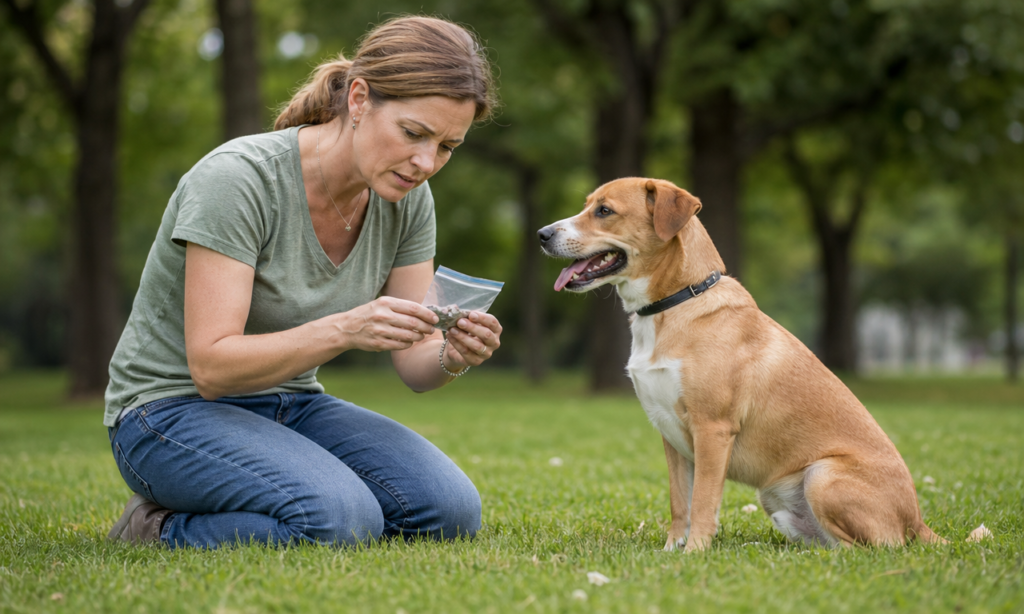
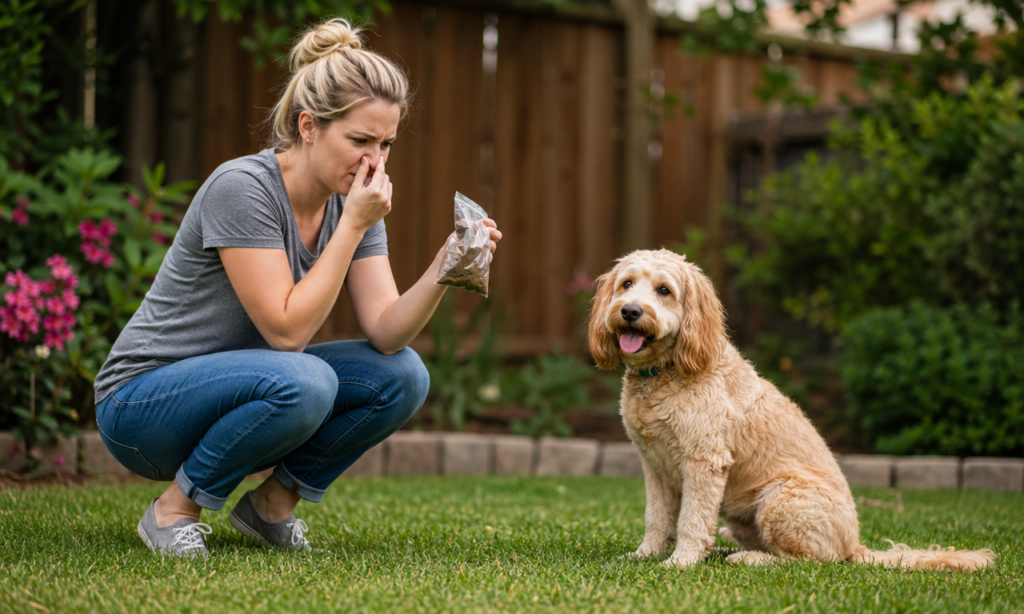
Is your dog not pooping after eating and you’re wondering whether to worry? Most people assume dogs should poop within minutes of finishing a meal — the famous “gastrocolic reflex” — but the reality is more nuanced. A dog not pooping after eating can be completely normal, especially in adults. Here are the 5 best explanations, when it signals a problem, and the practical timelines that actually apply.
The gastrocolic reflex — what it actually is
When food enters the stomach, signals to the colon say “make room for what’s coming.” This is the gastrocolic reflex. In puppies and many adolescent dogs, it’s strong enough to trigger a bowel movement 5-30 minutes after a meal. In adult dogs, it weakens and becomes more of a gentle nudge than a guaranteed trigger.
So “dog not pooping after eating” within minutes of a meal is normal in adult dogs. It’s actually most puppies and young dogs who reliably go right after — which is why post-meal walks are so effective for puppies during house training.
5 best reasons for a dog not pooping after eating
1. They’re an adult (gastrocolic reflex weakened)
The most common explanation. Adult dogs typically poop 2-3 times per day on no specific schedule relative to meals. They might go right after breakfast or 4 hours later. Both are fine.
If your adult dog poops once or twice a day on their own internal clock, the post-meal timing doesn’t matter. See our holding capacity guide for what’s normal for adult intervals.
2. They went earlier and have nothing left
If your dog pooped recently — like an hour ago on their morning walk — there may simply be nothing in the colon to process. Eating a meal won’t conjure stool. This is a frequent “dog not pooping after eating” mystery that’s actually just good plumbing.
Track when they last went. If less than 4-6 hours ago and the stool was full-sized, no surprise they’re empty.
3. They’re stressed or in an unfamiliar place
Stress shuts down the gastrocolic reflex. Travel, boarding, vet visits, new homes, even new walking routes can cause a dog not pooping after eating despite hours having passed. Most dogs resume normal patterns within 24-48 hours of returning to familiar territory.
If you’re traveling with your dog and they haven’t gone in 24 hours, don’t panic — give them quiet time and a familiar grass spot. Most resume within another 12 hours.
4. They’re a small / brachycephalic breed
Small breeds (Chihuahuas, Yorkies, Pomeranians) and flat-faced breeds (Pugs, Bulldogs, Frenchies) often have slower or more variable digestion. A dog not pooping after eating in these breeds is normal — they may consolidate to one poop per day in late afternoon or evening.
5. They’re on a highly digestible diet
Raw diets, fresh food diets, and prescription “low-residue” foods produce less stool overall. Less to pass = less frequent pooping. A raw-fed dog might poop once every 18-24 hours and that’s completely normal. See our raw diet stool guide for what to expect with higher absorption diets.
Dog not pooping after eating — when to actually worry
Pattern matters more than any single missed post-meal poop. Watch for these warning combinations:
- No poop in 48+ hours with eating normally. Past the “normal variation” window. Time for vet consultation.
- Straining without producing stool. Distress posture in the yard with nothing coming out — see our straining guide. Could be constipation, obstruction, or anal gland issue.
- Visible discomfort, hunched posture, restlessness. Painful belly + no pooping = vet today, possible obstruction.
- Vomiting alongside no pooping. Could indicate intestinal blockage. Same-day vet visit.
- Hard pellet-like stool when they finally do go. Dehydration or insufficient fiber. See our constipation guide.
- Sudden change from twice-daily to nothing. Sudden behavioral changes need attention even if no other symptoms yet.
The 48-hour window is a good rule of thumb for healthy adults. Puppies under 6 months should never go more than 24 hours without pooping — they should be going 2-5 times daily based on age.
How long after eating SHOULD a dog poop?
Practical timelines by age:
| Age | Typical post-meal timing |
|---|---|
| Puppy 8-16 weeks | 5-30 min (often during/after meal) |
| Puppy 4-6 months | 15-45 min |
| Adolescent 6-12 months | 30-90 min |
| Adult 1-7 years | 30 min to 4+ hours; variable |
| Senior 7+ years | Often slower, 1-6 hours; pattern matters more than timing |
For puppies still in house training, use the gastrocolic reflex strategically: take them out 5-20 minutes after meals. The reflex is strongest in young dogs and you’ll catch most pees and poops outside if you’re consistent.
Things that can disrupt the dog not pooping after eating pattern
Common triggers:
- Diet changes. Switching foods often shifts when and how often a dog poops for 5-10 days. Patience.
- Increased exercise. Sudden exercise increase usually triggers more pooping (good!).
- Decreased exercise. Sedentary dogs poop less frequently. Combine with rich diet = constipation risk.
- Medications. Pain meds (especially opioids), antihistamines, and some antibiotics can slow gut motility.
- Anesthesia. Post-surgery dogs may not poop for 1-3 days. Vets expect this.
- Dehydration. Insufficient water = constipated stool. Always check the water bowl.
If you’ve recently changed any of these, that’s likely your answer.
What to do if your dog hasn’t pooped in 24-36 hours
Before panicking, try these steps:
- Increase water access. Add a second bowl. Add a tablespoon of warm water to dry kibble.
- Take a longer walk. Physical motion stimulates the gut.
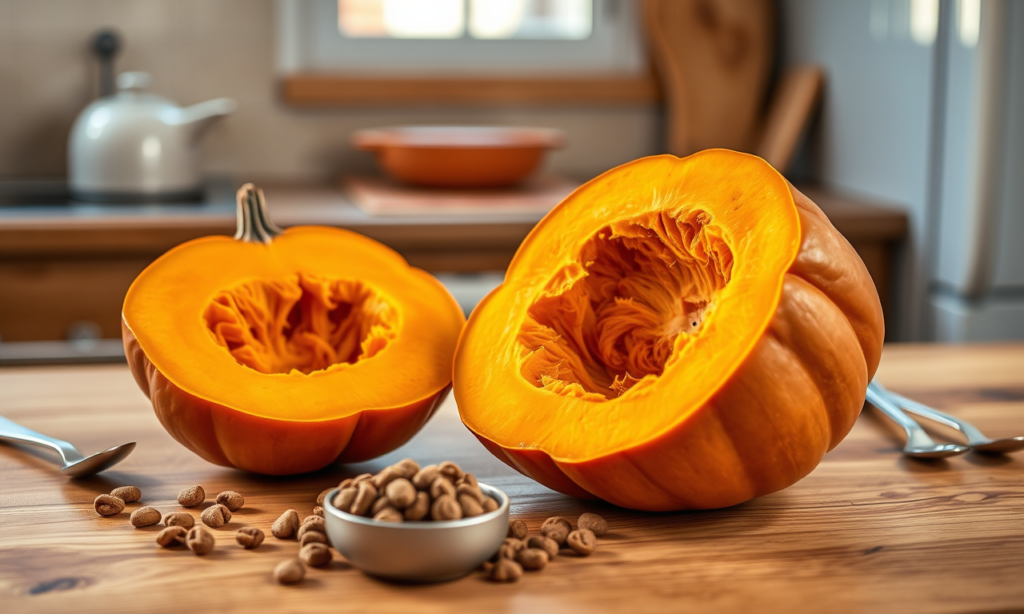
- Add a tablespoon of plain canned pumpkin. Gentle fiber boost that usually moves things within hours.
- Check for stress triggers. Recent travel, new pet, change in routine?
- Note timing of last poop and meal. Useful for the vet if you do need to call.
The AKC pooping frequency guide has a useful overview if you want to read more on normal ranges.
FAQ
How long can a dog safely go without pooping? Healthy adults: up to 48 hours without alarm. Past 48 hours, see a vet. Puppies: no more than 24 hours.
Should I use laxatives? No — most human laxatives are dangerous for dogs. Vet-prescribed options exist for chronic constipation. For mild cases, pumpkin and water are safer.
Could my dog have an obstruction? Possible if no poop + vomiting + visible discomfort + no appetite. That’s an emergency. Otherwise, obstruction usually shows multiple symptoms together.
What about senior dogs that “skip” days? Some seniors with reduced activity naturally consolidate to once-every-36-hours. As long as stool quality is normal and the dog seems comfortable, this is fine.
Bottom line
A dog not pooping after eating is mostly an adult-dog phenomenon — the gastrocolic reflex weakens with age. As long as your dog poops at least every 24-36 hours (24 hours for puppies), eats normally, and isn’t straining or in pain, the timing relative to meals doesn’t matter. Watch for combined symptoms: straining, vomiting, refusing food, hunched posture. Those signal urgency. Plain “didn’t go right after dinner” almost never does.
This article is general information, not veterinary advice. If your dog is sick, talk to your vet.