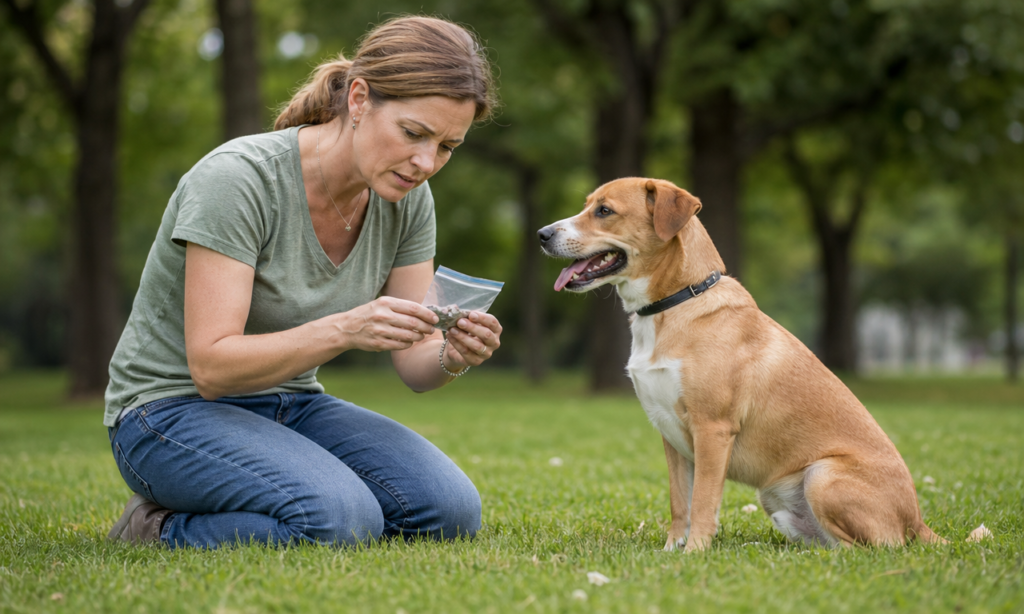
Green dog poop is alarming the first time you see it, and depending on the shade and the dog’s other signs, it can mean anything from “your dog ate too much grass” to “call the vet today.” Knowing the difference is mostly about pattern recognition: what shade of green, what texture, what else is going on with your dog. Here’s a practical guide so you can tell which bucket you’re in.
Below: the six most common reasons for green dog poop, what each one looks like, and exactly when to stop wondering and call the vet.
What “green” really means in the dog poop color chart
Stool color comes from the bile that emulsifies fat during digestion. Bile is bright yellow-green when secreted; in normal stool it gets reduced and oxidized to brown by the time it exits. Anything that interrupts that conversion — fast transit, malabsorption, foreign pigment, or a gallbladder issue — can leave the stool greener than normal.
So when you see green dog poop, the question is: did the green come from bile (most common, often digestive), plant matter (eating grass or vegetables), or a problem upstream (parasites, gallbladder, ingested toxin)?
For a baseline of every other color and what it usually signals, our dog poop color chart covers the full range.
1. Eating too much grass — the most common cause of green dog poop
The most common, and usually the most benign, reason for green dog poop. Grass and other leafy material pass through dogs relatively undigested, and the chlorophyll tints the stool a green that ranges from pale olive to deep forest depending on volume.
Telling signs:
- You saw your dog graze on grass earlier that day
- Visible plant matter in the stool
- Stool is otherwise normal in texture and frequency
- Dog is eating, drinking, and acting normally
What helps: nothing — it’ll resolve on its own as the grass passes through. If your dog grazes excessively (every walk, large amounts), that can be a sign of nausea or boredom and is worth bringing up at the next vet visit.
2. Vegetable-heavy meal or treats
Dogs eating fresh green vegetables (broccoli, peas, spinach, kale) or anything containing artificial green dye can produce green dog poop within 12–24 hours. Same mechanism as grass — the pigment passes through.
Telling signs:
- You changed their food, gave a new treat, or shared a vegetable scrap recently
- Dog otherwise feels fine
- Returns to brown within a day or two of the diet returning to normal
3. Fast intestinal transit (mild gut upset)
If food moves through the intestine too quickly, bile doesn’t get fully reduced and the stool comes out greener than normal. This is the most common dietary cause of green dog poop that’s not just plant matter — and it usually shows up alongside soft stool or mild diarrhea.
Triggers: food change, dietary indiscretion (something they shouldn’t have eaten), mild stress, antibiotic course, or a high-fat meal.
What helps at home: a 24-hour bland diet (boiled chicken + plain rice, small portions every few hours), plus probiotics if you have them. Most cases self-resolve. For full guidance, our dog diarrhea guide covers when to escalate.
4. Parasites — especially Giardia
Giardia and a few other intestinal parasites can produce greasy, sometimes greenish stool that smells noticeably worse than normal. The texture is the giveaway: greasy, mucus-coated, often with a yellow-green tinge rather than the clean grass-green of plant matter.
Telling signs:
- Greasy or oily-looking texture
- Stronger-than-usual smell
- Stool contains visible mucus
- Intermittent diarrhea over weeks rather than a one-day issue
- Dog may show weight loss despite eating normally
Diagnosis is a fecal test at the vet. Giardia is highly contagious among dogs (and rarely to humans), so it’s worth treating promptly.
5. Gallbladder or liver issue
Less common but more serious. If the gallbladder isn’t releasing bile correctly, or the liver isn’t processing it, the stool can show up persistently green or yellow-green. This usually doesn’t show up as a one-time green poop — it’s a pattern over days or weeks.
Telling signs requiring vet attention:
- Persistent green dog poop over more than 3–4 days with no diet change
- Yellow tinge to the gums or whites of the eyes (jaundice)
- Decreased appetite or vomiting
- Lethargy
- Pale-colored urine or unusually dark urine
Diagnosis requires bloodwork and possibly imaging. The American Kennel Club has a good overview of liver disease symptoms in dogs if you want a deeper read.
6. Rat poison or anticoagulant ingestion
Some rodenticides contain a green or blue dye that passes through to the stool, and the active ingredient causes internal bleeding that can show up as black tarry stool (melena) alongside the dye. If you see green dog poop with grain-pellet-like fragments, or the green is unusually vivid and you can’t account for it, treat as an emergency.
Same-day emergency vet if:
- Possible access to rat or mouse poison in the last 5 days
- Vivid teal or unnatural green coloration
- Lethargy or unexplained bruising on the gums or skin
- Bleeding from any other site (nose, gums, urine)
Anticoagulant poisoning is treatable when caught early but fatal if untreated.
The triage checklist for green dog poop
Run through these in order:
- Could the dog have accessed rat poison or pesticides in the last 5 days? → emergency vet now.
- Is the dog vomiting, lethargic, or refusing food? → vet today.
- Is the green dog poop greasy, mucus-coated, or persistently green for 3+ days? → fecal test at the vet this week (Giardia or similar).
- Are gums or eyes yellow-tinged? → vet today (possible liver/gallbladder).
- Did the dog eat grass, vegetables, or a new treat in the last 24 hours and otherwise feels fine? → wait it out; should resolve in 1–2 days.
- One soft green stool, dog otherwise normal, no diet change? → 24-hour bland diet; if not back to normal, vet.
What to bring the vet
If at all possible, bring a small sealed sample of the stool. Vets can run a fecal test on it to check for parasites, occult blood, and abnormal bacterial overgrowth — all cheap, fast, and conclusive. Photos help if you didn’t save a sample.
Also useful:
- Every food, treat, and chew the dog has had in the last 7 days
- Any medications or supplements
- Recent travel or contact with other dogs
- Whether the green dog poop is a one-time event or has been ongoing
Prevention going forward
- Limit unsupervised grass grazing. Some is fine; bingeing isn’t.
- Slow down food changes. Transition over 7+ days when switching foods.
- Keep rat poison out of reach. Even “pet-safe” formulations can be ingested in quantity.
- Annual fecal test. Catches asymptomatic parasites before they cause symptoms.
- Establish what your dog’s normal looks like. Shape, color, frequency. The faster you spot “off,” the easier the diagnosis. Our frequency guide covers what’s normal.
The bottom line
Green dog poop is most often diet-related and self-resolving — but the times it isn’t are exactly the times it matters most to act fast. Use the triage checklist above; when in doubt, the vet’s phone triage line is free, and a fecal test is cheap. For broader stool reading, our guides on black tarry dog poop, a dog straining to poop, and the dog poop color chart cover related signals.
This article is general information, not veterinary advice. If your dog is sick, talk to your vet.