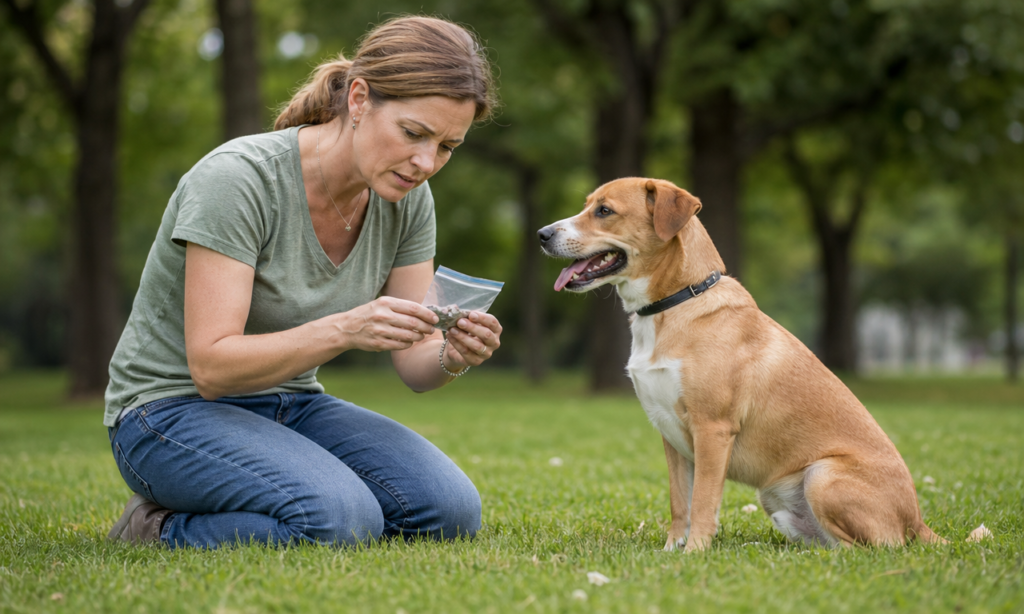
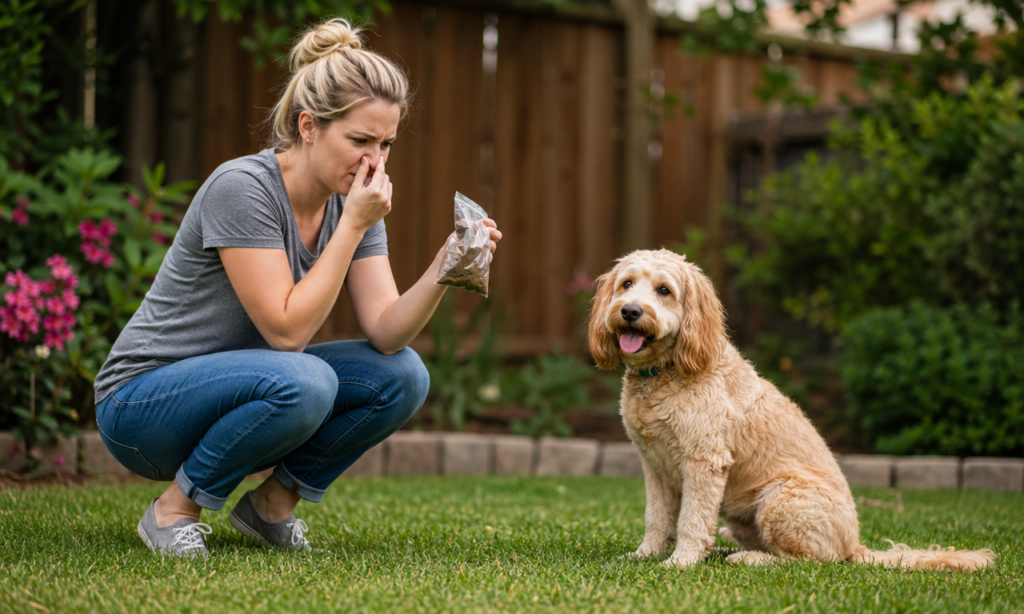
Your vet asked for a stool sample, and now you’re standing in the yard wondering exactly how to collect dog poop sample for vet testing without making a mess of it. The honest answer is simpler than the internet makes it look — but timing, container, and storage really do matter. Here are the 5 best practical steps for how to collect dog poop sample for vet testing, plus what NOT to use and the common mistakes that ruin samples before they reach the lab.
Why proper collection matters
Three reasons the technique matters:
- Parasites die quickly. Many parasites and bacteria stop being identifiable once stool dries out or sits too long. Old samples = missed diagnoses.
- Contamination throws off tests. Soil, grass, and chemical residues can confuse fecal exams.
- Wrong container leaches. Some plastic containers react with stool moisture and skew bacterial culture results.
A properly collected sample takes about 60 seconds. A bad sample wastes the vet visit and means you’ll be back. Learning how to collect dog poop sample for vet testing once means you won’t have to redo it next year. See our poop color chart for visual context the vet will also ask about.
The 5 best steps for how to collect dog poop sample for vet testing
1. Collect within 4-6 hours of the appointment (ideally fresh)
The fresher, the better. Ideal: collected within 4 hours of dropping at the vet. Maximum: 12 hours stored properly. Stool sitting longer than 12 hours loses diagnostic value for many tests.
If your vet appointment is in the morning, the easiest move is to take the dog out 30-60 minutes before leaving and collect right then. Most dogs poop in the morning anyway. This is the simplest version of how to collect dog poop sample for vet visits — synchronize the bathroom trip with departure.
2. Use the right container
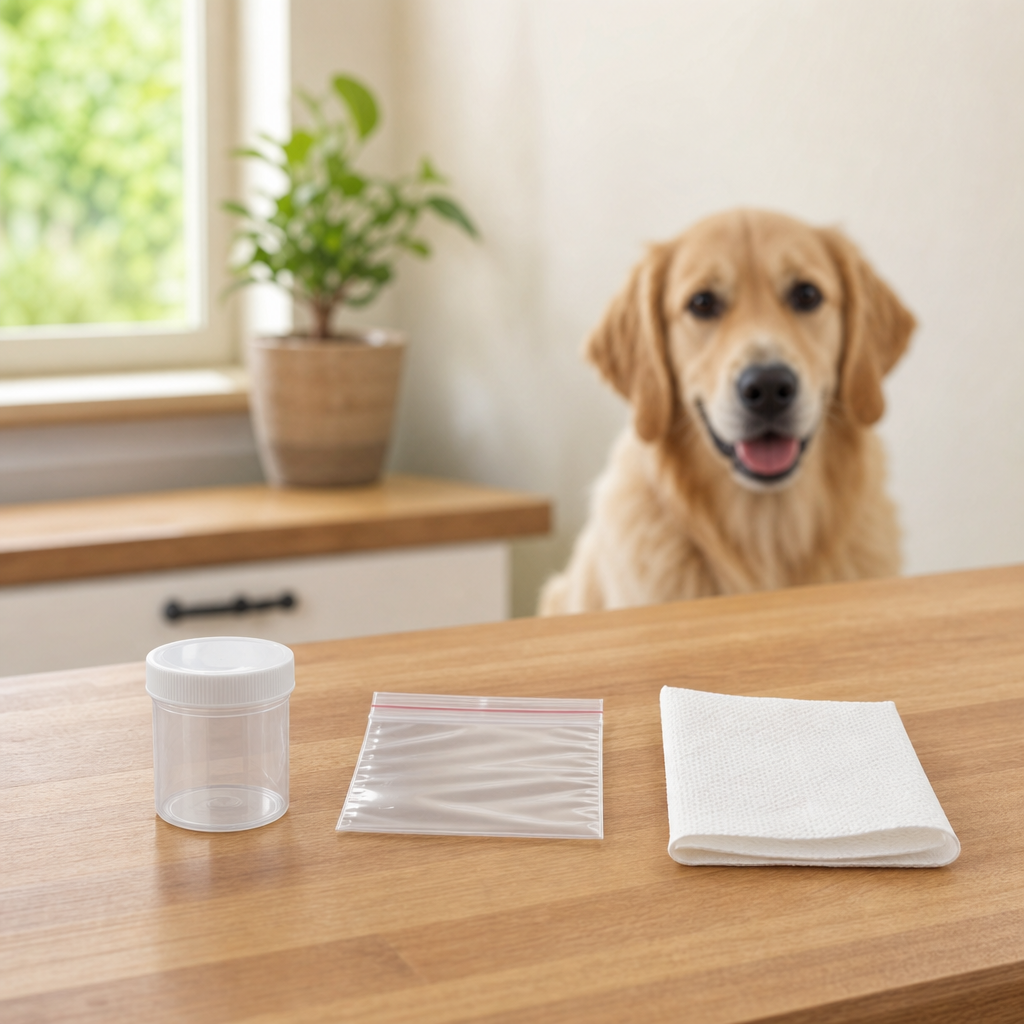
Best options (in order of preference):
- Vet-provided sample container. If your vet handed you a small plastic container at the last visit, use that. Designed for the job.
- Clean plastic Ziplock-style bag. Acceptable. Double-bag to prevent leaks. Squeeze out air before sealing.
- Clean empty pill bottle or small jar. Works fine if washed thoroughly.
Avoid:
- Cardboard or paper containers — absorb moisture, ruin the sample
- Glass jars that previously contained food (residue contamination)
- Sandwich bags without a seal (leaks)
- Yard cleanup bags (often pre-treated with biodegradable enzymes that interfere with tests)
3. Collect only the stool, no dirt or grass
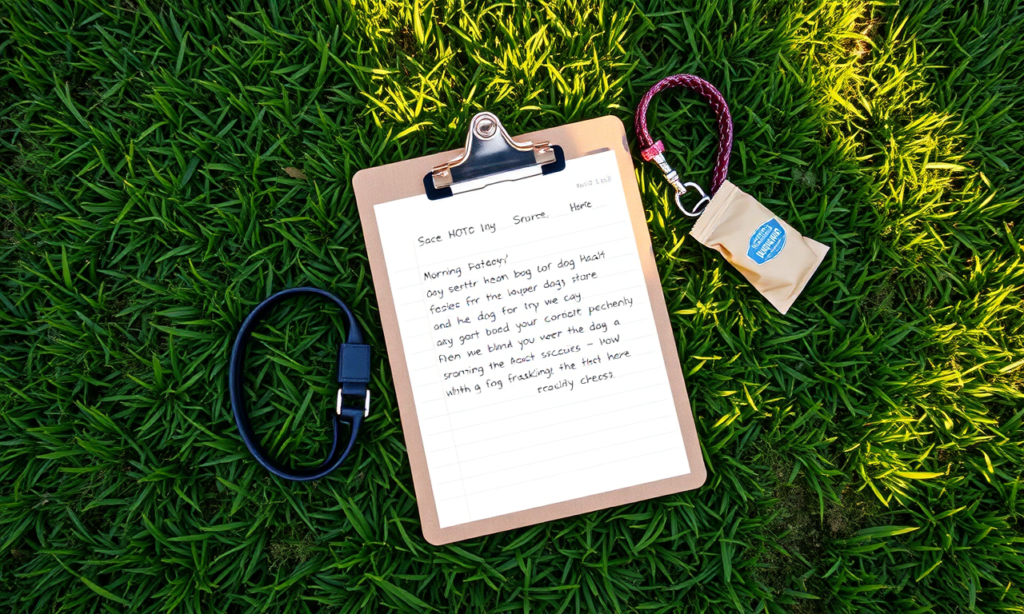
Use a clean disposable utensil — a popsicle stick, plastic spoon, or the inside of a turned-out plastic bag — to scoop just the stool. Try to avoid grass, dirt, or anything stuck to the underside.
How much: roughly a marble-sized amount is enough for most tests. Some specialized tests (like Giardia ELISA) need more — your vet will tell you in advance if the standard amount isn’t enough.
If the stool is loose or diarrhea, collect what you can — even a teaspoon of liquid stool in a sealed container is usable. See our diarrhea causes guide for context on what the vet is looking for.
4. Label and refrigerate immediately
Write on the container with permanent marker:
- Dog’s name
- Date and time collected
- Owner name
Then refrigerate (35-40°F). Do NOT freeze — freezing destroys parasites and bacteria the vet wants to identify. Refrigeration slows decomposition without destroying organisms.
Keep separate from food. Either a shelf away from your edibles or sealed in a second sealed bag.
5. Transport to the vet in a cooler or insulated bag
For trips longer than 20 minutes, use a small insulated bag with an ice pack. Don’t let the sample warm up to room temperature during the car ride. Drop off as soon as you arrive — don’t leave it in the car while you check in.
How to collect dog poop sample for vet — what NOT to do
Three common mistakes to avoid when figuring out how to collect dog poop sample for vet testing the right way:
- Collecting day-old stool from the yard. Too dry, too contaminated, parasites already dead. Vets often won’t run the test.
- Adding water or saline to “preserve” it. Don’t dilute. The stool’s own moisture is what the lab needs.
- Microwaving or warming to “kill smell.” Heat destroys the sample. Cold preserves it.
Also: don’t combine samples from multiple dogs into one container if you have a multi-dog household — you’ll waste the test trying to figure out which dog is positive.
Special cases when collecting changes
Watery diarrhea
Use a turkey baster or syringe (without needle) to suck up liquid stool. Put it in a leak-proof container. See our watery dog poop guide for what the vet may be testing.
Blood in stool
Collect a piece WITH the blood visible. Note the blood color in writing on the label. Fresh red blood ≠ digested black blood — both diagnostic, but for different things. See our melena guide.
Mucus-covered stool
Don’t wipe the mucus off — that’s what the vet wants to test. Collect the whole sample mucus-and-all. See our mucus guide.
Worms visible in stool
Collect the stool with the worm intact if possible. Don’t try to preserve the worm separately. The worms guide shows what’s identifiable.
Constipated dog producing tiny stool
Any amount helps — even a marble-sized hard pellet. See constipation guide for context.
How to collect dog poop sample for vet — timing tips for tricky dogs
- Picky pooping schedule: If your dog poops at random times, collect the next available sample within 12 hours of the appointment and refrigerate.
- Dogs that won’t poop on demand: Stress eats appetite and bowel motion. Give them quiet alone time in a known spot. A short brisk walk often triggers a bowel movement within 15 minutes.
- Multi-dog household: Separate dogs before yard time on collection day so you can identify whose stool is whose. Walk them individually.
- Pre-collection tips: Skip the morning meal if collection is happening early — empty stomachs sometimes produce cleaner samples.
If you’ve tried for 24+ hours without success, call the vet and ask whether the appointment can be rescheduled or if a partial sample is acceptable.
What the vet does with the sample
The most common tests:
- Fecal flotation. Mixes the sample with a solution that floats parasite eggs to the top for microscope examination.
- Direct smear. Looks at fresh stool under microscope for protozoa like Giardia.
- Fecal ELISA / antigen tests. Detects specific pathogens (Parvo, Giardia, Cryptosporidium).
- Occult blood test. Detects blood not visible to the eye.
- Bacterial culture. Identifies harmful bacteria like Salmonella or Campylobacter.
The AAHA canine life stage guidelines recommend annual fecal exams for most dogs, more frequent for high-risk lifestyle dogs.
FAQ
How much stool do I really need? Marble-sized for most tests. The lab needs less than you’d think.
Can I refrigerate overnight? Yes, up to 24 hours is generally acceptable. Just don’t freeze.
What if my dog already pooped this morning before I knew about the appointment? Call the vet — sometimes they’ll accept it if it was collected promptly and refrigerated.
Do I need to wash the container before collection? Yes — soap and hot water, then air dry. No residue.
Is it OK to collect with my hand (in a bag)? Yes. Standard “inside-out bag glove” method is fine for the collection itself, then transfer to your sealed container.
Bottom line
How to collect dog poop sample for vet testing: catch it fresh (within 4-6 hours of appointment, max 12), use a clean sealed container, label with name/date/time, refrigerate immediately, transport cool. Avoid old yard stool, never freeze, don’t dilute, and skip biodegradable yard bags that contain enzymes. A marble-sized fresh sample beats a tablespoon of old contaminated stool every time. Most owners learn how to collect dog poop sample for vet visits properly once and never need to relearn it. Five minutes once you know the routine.
This article is general information, not veterinary advice. If your dog is sick, talk to your vet.