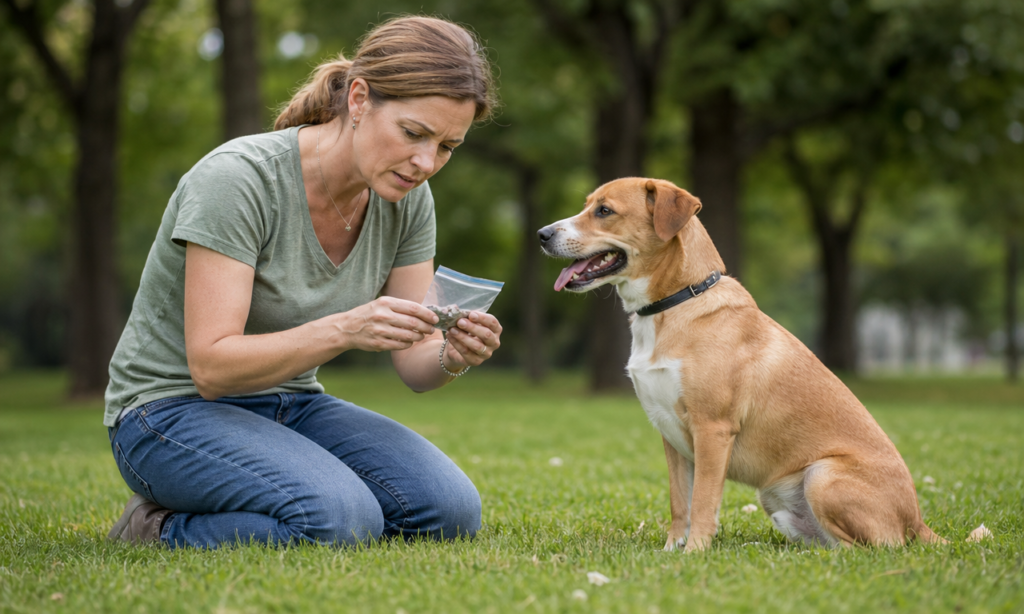
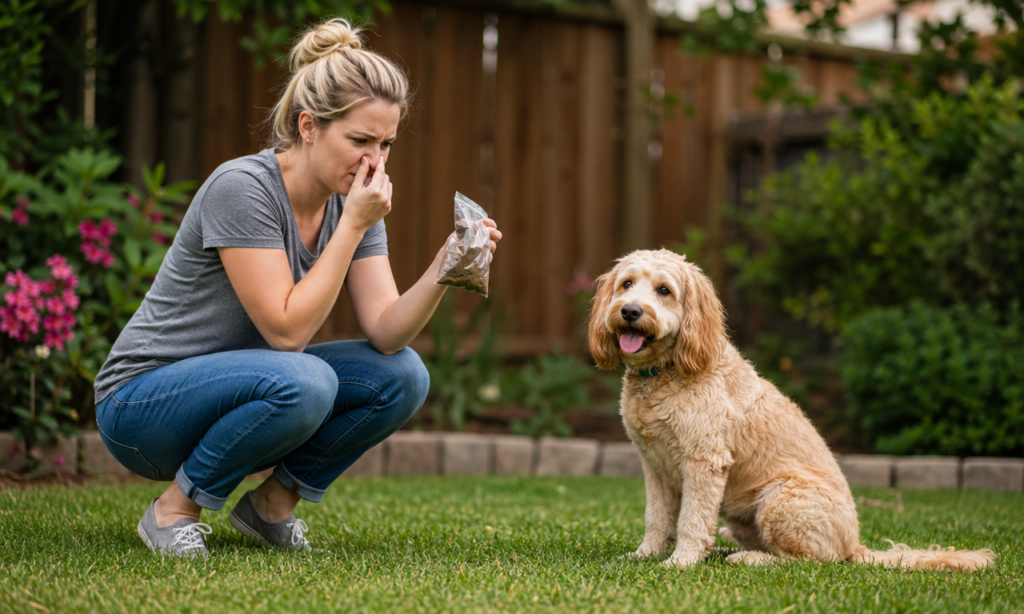
Walked your dog for 30 minutes and still no poop? Dog not pooping on walks is one of the most common puppy and adolescent dog behaviors — and even adult dogs go through phases of it. Sometimes it’s stress, sometimes a routine issue, sometimes a sign the bowel-on-walk training never fully clicked. Here are the 5 best reasons dogs hold it on walks, when it’s normal, and how to train your dog to “go on cue” reliably.
Why dog not pooping on walks is common
Three behavioral patterns explain most cases:
- Stimulation overload. New smells, sounds, sights — dog is too busy investigating to relax for elimination.
- Surface preference. Some dogs are trained or conditioned to only poop on specific surfaces (grass, dirt) — sidewalks freeze them up.
- Routine timing. If your dog has an internal “poop schedule” set to morning yard time, the walk timing may not align.
None of these are medical issues. Most resolve with training or routine adjustment.
The 5 best reasons for dog not pooping on walks
If you’re frustrated with a dog not pooping on walks despite long sessions, these five causes cover ~95% of cases. Identifying which one applies to your dog accelerates the fix.
1. New environment overstimulation
Dogs need to feel relaxed enough to eliminate. New routes, busy areas, lots of foot traffic — all activate alertness instead of calm. Dog is “on guard,” not in elimination mode.
Fix:
- Stick to familiar routes for 1-2 weeks during retraining
- Walk during quieter hours (early morning, mid-afternoon)
- Choose calmer environments (parks vs busy sidewalks)
Most overstimulated dogs settle within 5-10 minutes on a familiar quiet route.
2. Surface preference / training conditioning
Many dogs are trained to poop on grass or yard surfaces. They may resist sidewalks, concrete, or unfamiliar mulch. This is conditioning, not preference — but it feels like preference to the dog.
Fix:
- Walk routes that include grass strips alongside sidewalks
- Walk to a small grass area and pause there for 5 minutes
- Reward heavily when dog does eliminate on the new surface
3. Timing misalignment with internal schedule
Dogs have surprisingly regular GI rhythm. If your dog’s natural elimination time is 7:00 AM and you walk at 8:30 AM, they may have already eliminated in the yard before you left.
Fix:
- Walk before breakfast (most dogs poop within 30 min of eating)
- Identify your dog’s natural elimination window and walk during it
- Track for 5-7 days to find the pattern
See our holding capacity guide for context on normal frequency by age.
4. Anxiety or stress on the walk
Dogs stressed by the walk experience itself (leash anxiety, fear of cars, fear of other dogs) won’t relax enough to eliminate.
Signs:
- Tail tucked or low
- Pulling on leash, hyper-vigilance
- Avoiding eye contact, ears pinned back
- Won’t take treats during walk
If your dog also has loose stool from stress, see our stress diarrhea guide for the related GI side.
5. Distraction by other dogs or wildlife
Dogs that are reactive to other dogs, squirrels, cyclists, etc. can’t shift into elimination mode. They’re in “react” mode the whole walk.
Fix:
- Walk during low-traffic hours initially
- Practice “look away” and “leave it” cues
- Use calming aids if needed
Training fix for dog not pooping on walks (“go on cue”)
Five-step training protocol:
- Pick a verbal cue. “Go potty,” “do your business,” whatever you’ll use consistently.
- Catch them mid-poop. When dog starts pooping (in yard or on walk), say the cue softly.
- Reward immediately. Treat within 2 seconds of finishing.
- Repeat for 2-3 weeks. Daily, every elimination, until association is built.
- Test on walk. After 2-3 weeks, use the cue on walks. Most dogs respond within a few sessions.
This is the same protocol used for puppy potty training, applied to adult dogs.
When dog not pooping on walks signals a medical issue
Watch for these patterns:
- Hasn’t pooped in 24+ hours total (not just on walks). Possible constipation — see our constipation guide.
- Straining without producing. See our straining guide.
- Painful posture or yelping. Vet visit needed.
- Sudden change in previously normal walking habits. Worth a vet check.
- Other GI symptoms. Diarrhea, vomiting, energy drop alongside.
The AKC pooping frequency guide covers the normal range — if your dog is eliminating elsewhere normally and just not on walks, the issue is behavioral, not medical.
Practical walk strategies
Five tactical tips for getting your dog to poop on walks:
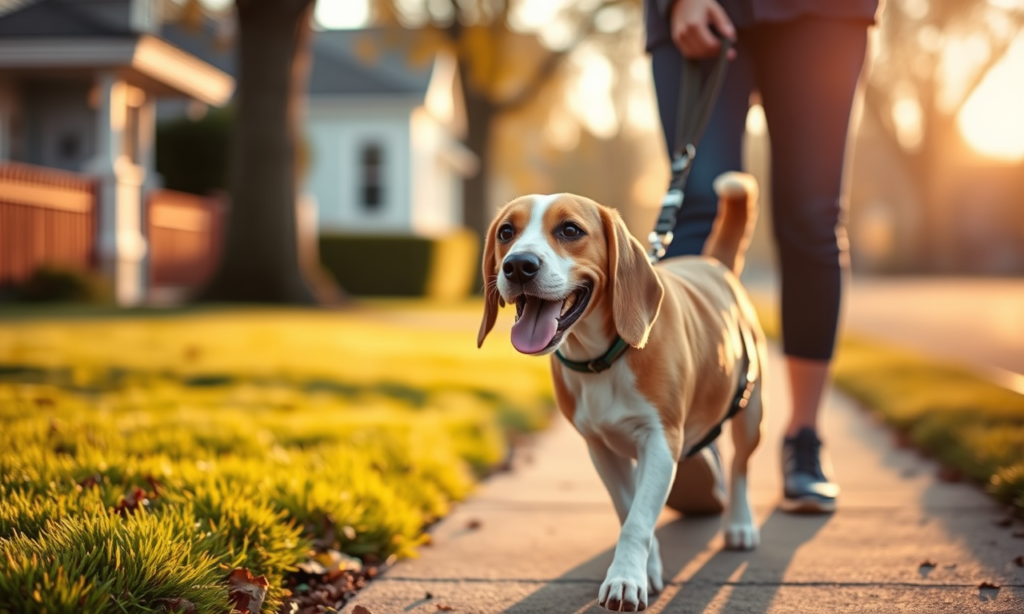
- Walk longer. 20-30 min minimum. Many dogs eliminate around minute 15-25 once they’ve relaxed.
- Stop at grass spots. Pause for 2-3 minutes at each grass area. Don’t keep walking past good spots.
- Walk slower. Brisk walking activates the dog. Slower pace allows relaxation.
- Walk after meals. The gastrocolic reflex triggers within 30 min of eating in many dogs.
- Stay quiet. Don’t chat on phone or talk to your dog constantly. Quiet = calmer dog.
For broader yard strategies, see our yard pickup guide.
Special cases
Puppies
Puppies under 6 months often won’t poop on walks initially. They’re still building bowel-on-walk associations. Be patient, walk same route, reward heavily.
Senior dogs
Senior dogs may have slower walks and reduced bowel motility. Walk during their natural elimination window. Don’t rush.
Rescued or recently adopted dogs
New dogs need 2-4 weeks to settle into routine. Expect inconsistency early.
Common owner mistakes with dog not pooping on walks
- Cutting walks short. If walk ends before dog is ready, they hold it. Walk full length.
- Inconsistent walk timing. Same time daily builds the routine. Random times disrupt it.
- Walking on autopilot. Phone use, music — dog senses your inattention.
- Punishing or showing frustration. Stresses the dog further, makes elimination less likely.
- Letting dog only poop at home. Reinforces the yard-only behavior.
FAQ
Is it OK if my dog only poops in the yard? Yes, but it limits flexibility. If you travel or have hours-long outings, your dog needs to be able to go elsewhere.
How long should I wait for my dog to poop on a walk? 20-30 minutes is reasonable. Beyond that, return home and try again later.
Should I bring treats to reward outdoor pooping? Yes — high-value treats accelerate the cue association.
What if my dog only poops on grass, never concrete? Mostly fine. Just route walks past grass strips.
Does cold weather affect this? Yes — cold paws on cold concrete can make dogs avoid sidewalks. Booties help.
Bottom line
Dog not pooping on walks is almost always behavioral — overstimulation, surface preference, timing misalignment, anxiety, or distraction. The 5 fixes: stick to familiar routes, walk to grass spots, align with natural elimination timing, address walk anxiety, and reduce distractions. Train a “go potty” cue with consistent reward over 2-3 weeks. Most cases resolve within a month of consistent training. Watch for sudden changes that might signal medical issues. The dog not pooping on walks pattern is highly trainable in adult dogs — patience matters more than any single technique.
This article is general information, not veterinary advice. If your dog is sick, talk to your vet.