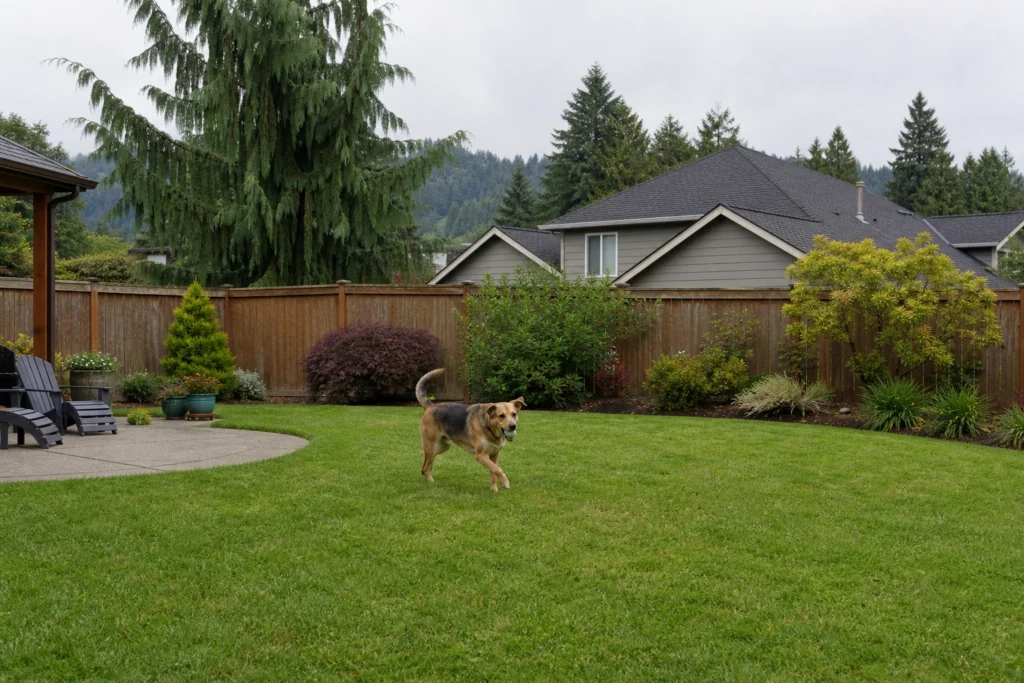
We’ve scooped thousands of Tri-Cities yards, and one of the most common problem areas we see is dog poop in flower beds. Dogs seem magnetically drawn to garden beds, mulched areas, and those freshly planted petunias you just put in. The soft soil feels good on their paws, the area is often sheltered, and they’ve claimed it as their designated bathroom before you even noticed.
But dog poop in flower beds creates more problems than just an unpleasant surprise when you’re weeding. It can damage plants, introduce harmful bacteria into your garden soil, attract pests, and make your landscaping a no-go zone for kids and pets. We’re breaking down why this happens, what the real risks are, and exactly how to clean up and prevent it.
The short answer
Dog poop in flower beds should be removed immediately using a scooper or bag, then dispose of it in the garbage. The area should be rinsed with water, and you may need to remove contaminated mulch or top soil. Fresh poop is easier to clean than old, decomposed waste that’s worked into the soil. Prevention strategies include physical barriers, training, and regular yard maintenance.
Why dogs target flower beds
Dogs aren’t trying to ruin your landscaping—they’re following instinct and preference. Flower beds offer several features that appeal to dogs looking for a bathroom spot.
The soft, loose soil is easier on their paws than compacted lawn or hard ground. Many dogs prefer a softer surface when doing their business, especially older dogs with joint issues or sensitive paw pads.
Garden beds are often located along fence lines or against the house, creating a sense of shelter and security. Dogs are vulnerable when they’re going to the bathroom, so they seek out spots where they feel protected.
Mulch retains interesting smells—decomposing organic matter, fertilizers, and previous bathroom visits all create scent markers that tell your dog “this is the spot.” Once one dog uses an area, the scent encourages repeat visits.
If you’ve recently tilled, planted, or refreshed the mulch, the disturbed earth is especially appealing. Fresh soil smells interesting to dogs and is easy to scratch and circle on before settling down.
Health risks of dog poop in flower beds
Dog poop in flower beds isn’t just a cosmetic problem. It introduces real health hazards that affect people, pets, and even your plants.
Parasites and pathogens in garden soil
Dog feces can contain parasites like roundworms, hookworms, whipworms, and giardia. These parasites can survive in soil for months or even years, especially in protected areas like garden beds where the waste isn’t exposed to direct sunlight or harsh weather.
When dog poop in flower beds breaks down, parasite eggs work their way into the soil. Children playing in the garden, adults weeding without gloves, or other pets digging can be exposed. Roundworm eggs are particularly concerning—they can remain viable in soil for years and cause serious illness if ingested.
Bacteria like E. coli and Salmonella are also present in dog waste. While these typically die off more quickly than parasite eggs, fresh dog poop in flower beds can contaminate hands, tools, and anything else that contacts the area.
Impact on edible gardens
If you’re growing vegetables, herbs, or fruit near where your dog does their business, the health risks increase. According to the CDC, dog feces should never be used as fertilizer for edible plants due to the risk of pathogen transmission.
Root vegetables like carrots and radishes, low-growing crops like lettuce and strawberries, and anything that might splash with contaminated soil during watering can pick up bacteria or parasite eggs from dog poop in flower beds nearby.
Even with thorough washing, there’s risk. It’s best to keep dogs from using any area within several feet of edible plants, and certainly not directly in vegetable beds.
Groundwater and runoff concerns
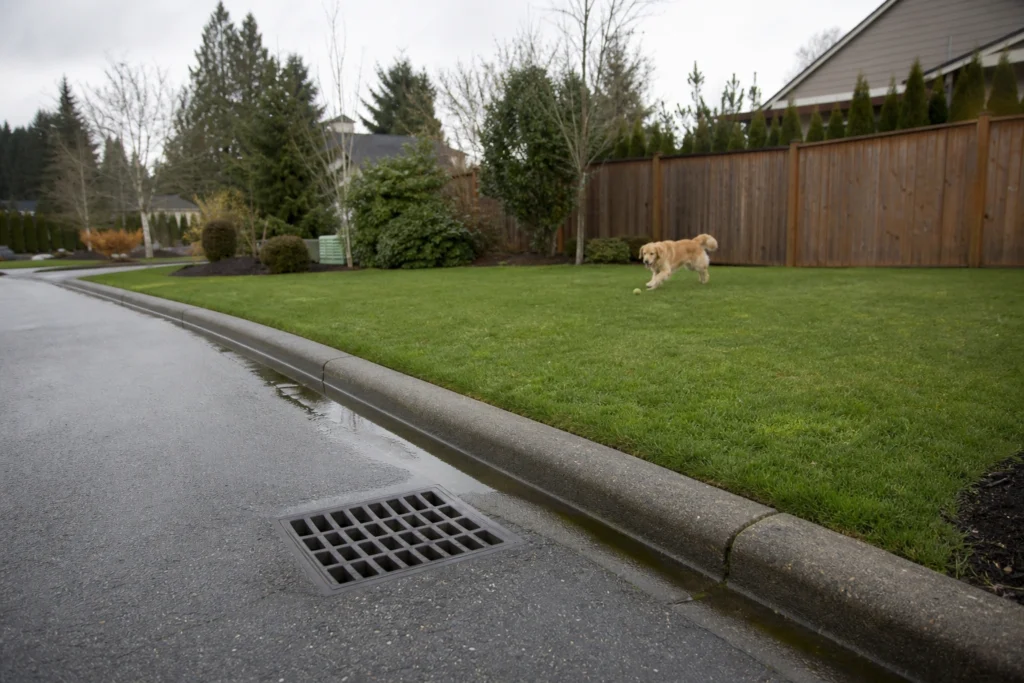
When it rains, bacteria and nutrients from dog poop in flower beds can wash into storm drains, eventually reaching local waterways. The Tri-Cities area drains into the Columbia River, and dog waste is a documented source of water pollution.
For more on this issue, check out our article on dog poop and water pollution, which covers how waste moves through yards and into the environment.
How dog poop in flower beds damages plants
You might think dog poop would act like fertilizer—after all, it’s organic waste. But dog waste is actually harmful to most garden plants, especially in the concentrated amounts that happen when a dog repeatedly uses the same flower bed.
Dog poop is extremely high in nitrogen. While plants need nitrogen, too much in one spot causes “fertilizer burn.” You’ll see brown, dead patches in the grass or mulch, yellowing leaves, stunted growth, or even plant death where your dog regularly goes.
The pH of dog waste is also problematic for many ornamental plants. It tends to be acidic, which can alter soil chemistry over time and create conditions where your carefully chosen flowers and shrubs struggle.
Salt content is another issue. Dog urine contains salts, and while we’re focused on poop here, dogs often urinate and defecate in the same area. The combination creates a highly concentrated zone that few plants tolerate well.
Repeated deposits of dog poop in flower beds create compacted, anaerobic soil conditions. The waste smothers beneficial soil organisms, reduces drainage, and creates an environment where roots can’t breathe properly.
Step-by-step cleanup for dog poop in flower beds
Cleaning dog poop in flower beds requires a slightly different approach than scooping from open lawn. Here’s how we handle it when we encounter heavily used garden beds during our routes.
1. Remove solid waste first
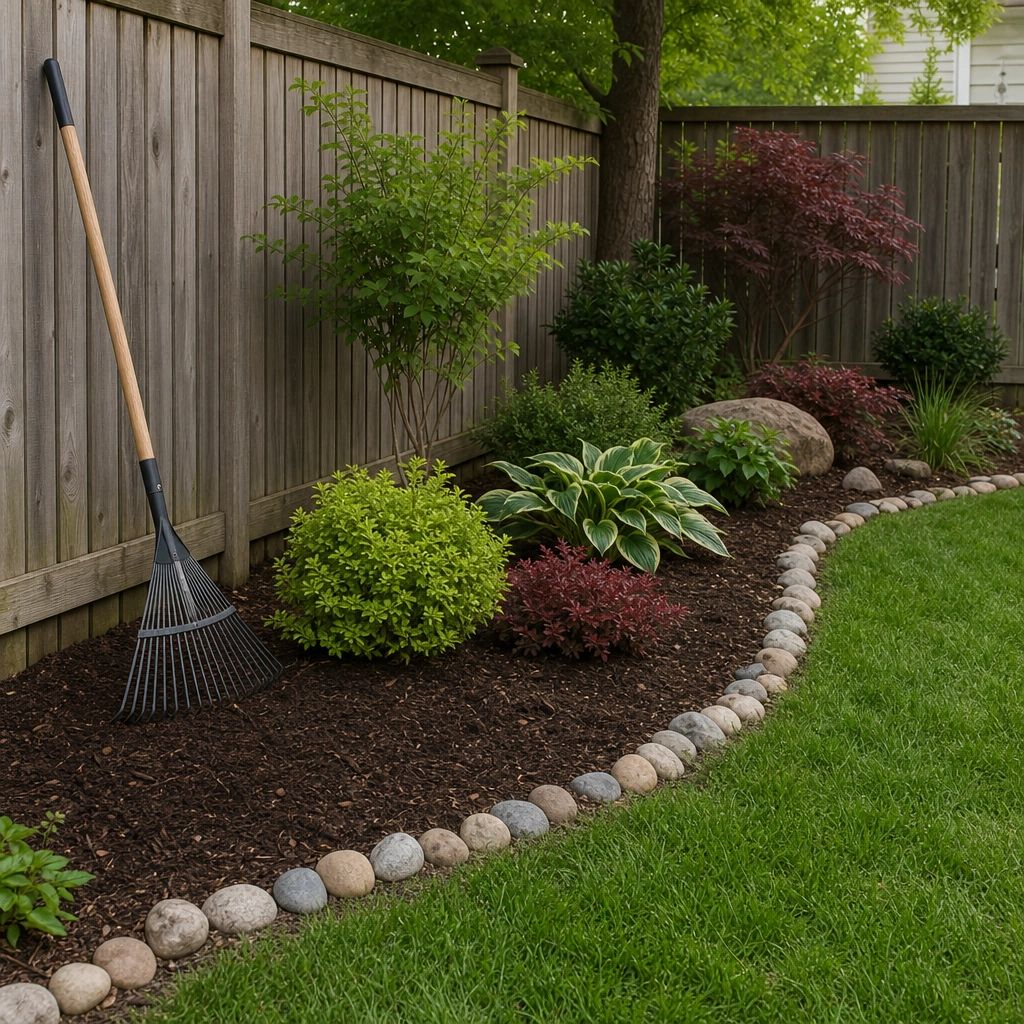
Use a sturdy pooper scooper, rake, or plastic bag to pick up all visible dog poop in flower beds. Get as close to the soil or mulch surface as possible without scooping up excessive amounts of mulch or soil.
For fresh poop, this is straightforward. For older, partially decomposed waste, you may need to scrape carefully or accept that some contaminated mulch will come up with it.
Dispose of the waste in a sealed bag in your regular garbage. Don’t compost it in standard backyard composters—dog waste requires high-temperature composting to kill pathogens. See our guide on DIY dog poop composters if you’re interested in that route.
2. Remove contaminated mulch or soil
If the dog poop in flower beds has been there for a while, or if your dog has used the same spot repeatedly, the top layer of mulch or soil is likely contaminated with bacteria and parasite eggs.
Remove the top 1-2 inches of mulch or soil in the immediate area and dispose of it. This is especially important if you have young children, immunocompromised family members, or edible plants nearby.
Don’t spread this contaminated material elsewhere in the yard. Bag it and throw it away, or if your municipality allows, dispose of it according to local guidelines.
3. Rinse the area thoroughly
After removing solid waste and contaminated material, rinse the area with a strong stream of water from your hose. This helps wash away residual bacteria and dilutes what remains.
For extra sanitation, you can use a diluted bleach solution (1 part bleach to 10 parts water) on hardscape elements like edging stones or decorative rocks, but avoid applying bleach directly to soil or plants as it’s toxic to beneficial soil organisms and can harm roots.
4. Replace mulch and top-dress soil
Add fresh mulch or compost to replace what you removed. This creates a clean surface layer and helps restore the appearance and function of your garden bed.
If you’re dealing with heavily contaminated soil where dog poop in flower beds has been a long-term problem, consider adding a layer of fresh topsoil before mulching to create more separation between roots and contaminated deeper layers.
5. Sanitize your tools
After cleaning up dog poop in flower beds, wash your scooper, rake, or any other tools with hot soapy water, then rinse with a diluted bleach solution or disinfectant spray.
Always wash your hands thoroughly with soap and water, even if you wore gloves. Keep hand sanitizer near your outdoor cleanup supplies for immediate use.
Prevention strategies for dog poop in flower beds
The best solution is preventing your dog from using flower beds as a bathroom in the first place. This takes a combination of physical barriers, training, and making alternative spots more appealing.
Physical barriers and deterrents
Low decorative fencing around garden beds creates a physical reminder for your dog. Even a 6-12 inch border can be enough to redirect most dogs, especially if installed when the behavior is just starting.
Chicken wire laid flat over mulch (then covered with a thin layer of fresh mulch) makes the surface uncomfortable for dogs to stand on. They can’t dig or circle properly, so they move on to other spots.
Motion-activated sprinklers startle dogs when they approach flower beds. After a few surprise sprays, most dogs learn to avoid the area. This works especially well for serial offenders who have a favorite garden bed.
Large rocks, decorative stones, or dense plantings along the edges make it harder for dogs to access the soft soil. If they can’t easily get to the area where they want to go, they’ll find somewhere else.
Training and redirection
Supervise bathroom breaks and interrupt your dog if they head toward the flower beds. Redirect them to an approved bathroom area—ideally a designated spot in your yard with mulch, gravel, or grass that you’ve chosen for this purpose.
Reward your dog with treats and praise when they use the correct spot. Positive reinforcement is far more effective than punishment after they’ve already used the flower bed.
If your dog has a strong habit of using a particular garden bed, you may need to temporarily block access entirely with temporary fencing while you retrain, then gradually allow supervised access once the new bathroom routine is established.
Make alternative spots more appealing
Create a designated dog bathroom area with soft mulch, pea gravel, or wood chips. Make it easily accessible, somewhat private, and large enough for your dog to circle and sniff comfortably.
Move some of the dog poop in flower beds to the new spot (once you’ve picked it up) to transfer the scent. Dogs follow their nose, and smelling their own waste in the “approved” area helps them understand that’s the place to go.
Keep this designated area clean with regular scooping—dogs prefer a reasonably clean bathroom spot. If the designated area becomes too soiled, they’ll seek out cleaner ground, often your flower beds.
Long-term yard management to reduce dog poop in flower beds
Consistent maintenance makes the biggest difference in keeping your garden beds clean and your yard pleasant for everyone.
Daily or every-other-day scooping
The more frequently you scoop, the less time dog poop in flower beds has to decompose into the soil, attract flies, or create lasting contamination. Fresh poop is also much easier to remove cleanly.
Make a quick walk around your yard part of your daily routine. It takes just a few minutes and prevents the problem from building up.
If you’re in the Tri-Cities area and tired of doing this yourself, we offer weekly, bi-weekly, and monthly scooping plans. We send a text reminder before we arrive, scoop the entire yard including those tricky garden beds, and leave a gate photo so you know the job’s done. No contracts, and you can sign up online in about two minutes at our services page.
Seasonal yard prep
Spring is a critical time to address any buildup of dog poop in flower beds from the winter months. Old snow piles melt to reveal months of accumulated waste, and spring rains can wash bacteria deep into your garden soil.
Do a thorough yard cleanup in early spring before you plant. Remove all visible waste, rake up decomposed material, and consider replacing the top layer of mulch in heavily used areas. Our article on spring yard cleanup for dog poop has detailed guidance for this seasonal reset.
Fall is another good time to refresh mulch and remove accumulated waste before winter sets in.
Yard deodorizing for problem areas
If you’ve had chronic issues with dog poop in flower beds, the lingering odor can continue to attract your dog even after cleanup. Enzyme-based yard deodorizers break down the organic compounds that create smell and scent markers.
We offer yard deodorizing as an add-on service for customers who need extra help with stubborn odor problems. It’s particularly useful after addressing a long-term flower bed issue or when preparing a yard for a party or outdoor event.
Special considerations for different flower bed types
Not all garden beds are created equal, and cleanup approaches vary depending on what you’re working with.
Mulched ornamental beds
Wood chip or bark mulch beds are the easiest to clean. Scoop the waste and any heavily soiled mulch, rinse if needed, and top with fresh mulch. The loose material is forgiving and replacement mulch is inexpensive.
Cedar mulch has natural odor-suppressing properties and may be slightly less attractive to dogs, though this varies by individual dog.
Rock or gravel beds
Rock beds are trickier because you can’t easily remove contaminated material—rocks are expensive to replace. Scoop solid waste carefully, then rinse thoroughly with a hose.
For persistent contamination, you may need to remove rocks in the affected area, clean them individually with a bleach solution, rinse well, and replace them after treating the underlying soil.
Densely planted beds
When dog poop in flower beds lands among closely spaced perennials, shrubs, or groundcover, access is difficult. Use a small hand trowel or a slim scooper to reach between plants.
You may need to gently move foliage aside, but avoid breaking stems or damaging roots. A spray nozzle on a hose can help rinse areas you can’t easily reach with tools.
Edible garden beds
As mentioned earlier, dog poop in flower beds that contain edibles is a serious health concern. If your dog has used a vegetable bed, remove all waste and contaminated soil immediately.
Don’t harvest anything that was directly contacted or within the splash zone. For root vegetables or low-growing crops in the affected area, it’s safest to discard them.
Consider installing a permanent barrier like a low fence to keep dogs out of edible garden areas entirely. Even a single incident can contaminate the bed for the entire growing season.
What to do if your dog suddenly starts using flower beds
If your dog has reliably avoided the flower beds and suddenly starts targeting them, there may be an underlying reason beyond simple preference.
Health issues can change bathroom habits. Digestive upset, urinary tract infections, or joint pain that makes it uncomfortable to squat on harder ground can all drive dogs to seek softer surfaces like garden beds.
If the behavior change is sudden or accompanied by other symptoms like straining, frequent trips outside, or changes in stool consistency, check with your veterinarian. Our guide on how to talk to your vet about dog poop can help you prepare for that conversation.
Changes in the yard environment can also trigger new bathroom spots. Recent landscaping, new mulch, removal of a favorite bathroom spot, or disruption from construction or visitors can all cause your dog to choose a new area.
Sometimes the answer is as simple as “that’s where another dog went.” If a visiting dog used your flower bed, your dog may be marking over the scent. Extra cleaning and deodorizing can help break this cycle.
How often should flower beds be checked and cleaned?
Ideally, check garden beds daily if your dog has yard access. A quick visual scan during your morning coffee or evening walk takes seconds and lets you catch dog poop in flower beds before it becomes a bigger problem.
At minimum, inspect and clean flower beds twice weekly. This prevents buildup, reduces odor and flies, and keeps contamination from working deep into the soil.
After parties, playdates with other dogs, or any time your dog seems to be spending more time in the garden area, do an extra check. Multiple dogs or excited play can lead to more frequent bathroom use in unusual spots.
If you’re physically unable to check daily, or you simply don’t want to deal with it, regular professional scooping service handles this for you. We check the entire yard including landscaped areas on every visit, so nothing builds up between your scheduled cleanings. Learn more about our plans and coverage at yourlocalscoop.com/services.
Can dog poop in flower beds ever be composted safely?
Technically yes, but it requires a dedicated hot composting system that reaches and maintains temperatures of 140-165°F for several days. Standard backyard composters don’t get hot enough to kill pathogens and parasite eggs reliably.
Most experts, including the Oregon State University Extension Service, recommend against backyard composting of dog waste unless you have experience with hot composting and a system designed specifically for pet waste.
Never use incompletely composted dog waste on edible gardens. Even for ornamental beds, there’s risk if the composting process wasn’t thorough.
For most homeowners, disposal in the garbage is the safest and simplest option. If you want to explore pet waste composting, our article on DIY dog poop composters covers the requirements and systems that can work.
Common mistakes when dealing with dog poop in flower beds
We’ve seen a lot of yards over the years, and some cleanup approaches actually make the problem worse.
Hosing it into the soil. Some people think if they just blast dog poop in flower beds with the hose, it’ll disappear into the ground and fertilize the plants. Instead, it spreads bacteria throughout the bed and pushes parasite eggs deeper into the soil where they survive longer.
Leaving it because “it’s natural.” Wild animal waste decomposes naturally because it’s scattered and diluted across large areas. Concentrated domestic dog waste in a small flower bed creates an unnatural buildup of pathogens and nutrients that harms rather than helps.
Using only a rake on mulch. Rakes work well on lawns but tend to scatter and break up dog poop in flower beds with mulch or loose soil. You end up with waste residue spread over a larger area. Use a scooper or bag for better containment.
Neglecting to replace contaminated mulch. If the same spot has been used repeatedly, scooping the surface waste isn’t enough. The top layer of mulch is contaminated and should be removed and replaced.
Punishing the dog after the fact. If you discover dog poop in flower beds hours after it happened, your dog has no idea why you’re upset. Punishment creates anxiety but doesn’t teach them where TO go. Focus on prevention and positive reinforcement instead.
Flower bed cleanup in different seasons
Seasonal changes affect both dog behavior and cleanup strategies for dog poop in flower beds.
Spring and fall
These are planting and mulching seasons, when freshly disturbed soil is most tempting to dogs. Be extra vigilant about keeping dogs away from beds you’ve just worked in.
The moderate temperatures mean waste decomposes at a medium rate—not the rapid breakdown of summer heat, but not the frozen preservation of winter either.
Summer
Heat accelerates decomposition, which means dog poop in flower beds breaks down quickly and the smell intensifies. Flies become a major problem within hours.
Daily scooping is essential in summer. The good news is that strong sun exposure and heat do help kill some surface bacteria (though parasite eggs in soil can still survive).
Winter
Frozen ground and snow cover hide dog poop in flower beds until spring thaw. Many Tri-Cities homeowners are shocked by what they find when the snow melts.
Try to scoop even in winter when possible—remove snow to access beds if your dog is using them. The frozen state actually makes pickup easier since everything’s solid and doesn’t smear.
For more winter-specific strategies, our article on spring yard cleanup addresses the post-winter accumulation problem.
When to call in professional help
Most flower bed cleanup is manageable as a DIY task, but some situations call for professional assistance.
If you have a large property with extensive landscaping and multiple dogs, keeping up with dog poop in flower beds and throughout the yard becomes a significant time commitment. Weekly or bi-weekly professional scooping keeps everything under control without eating up your weekends.
Physical limitations—bad back, mobility issues, pregnancy, or health conditions that make bending and scooping difficult—are excellent reasons to hand the job to someone else. There’s no prize for toughing it out.
If you’re preparing your yard for a big event, selling your home, or dealing with an HOA complaint about yard maintenance, professional cleanup gets the job done quickly and thoroughly. We’ve helped plenty of Tri-Cities homeowners get their yards event-ready or passing HOA inspections. Speaking of which, check out our article on HOA rules and dog poop if you’re navigating neighborhood requirements.
Severe contamination—a yard that’s been neglected for months, a puppy raising situation with multiple dogs, or a property you just moved into with prior dog waste buildup—benefits from professional-level cleanup. We see this often with new homeowners; our guide on new house yard prep for dogs covers what to expect and how to start fresh.
Final thoughts from the crew
Dog poop in flower beds is one of those problems that seems minor until you’re dealing with contaminated soil, dead plants, persistent odors, and the grossness of trying to weed around dried waste. The good news is that with consistent cleanup and some prevention strategies, it’s completely manageable.
Remove waste as soon as you spot it, address contaminated mulch or soil in problem areas, redirect your dog to an approved bathroom spot, and keep up with regular maintenance. Your garden beds will look better, smell better, and be safer for everyone who uses your yard.
We scoop hundreds of Tri-Cities yards every week, and we’ve seen it all—from pristine properties to complete disaster zones, and everything in between. The difference is almost always consistency. The yards that look best year-round are the ones where waste is removed on a regular schedule, whether the homeowner does it themselves or we handle it for them.
If you have questions about cleanup, service options, or anything else yard-related, check out our FAQ page or reach out. We’re always happy to help fellow Tri-Cities residents figure out the best approach for their situation.